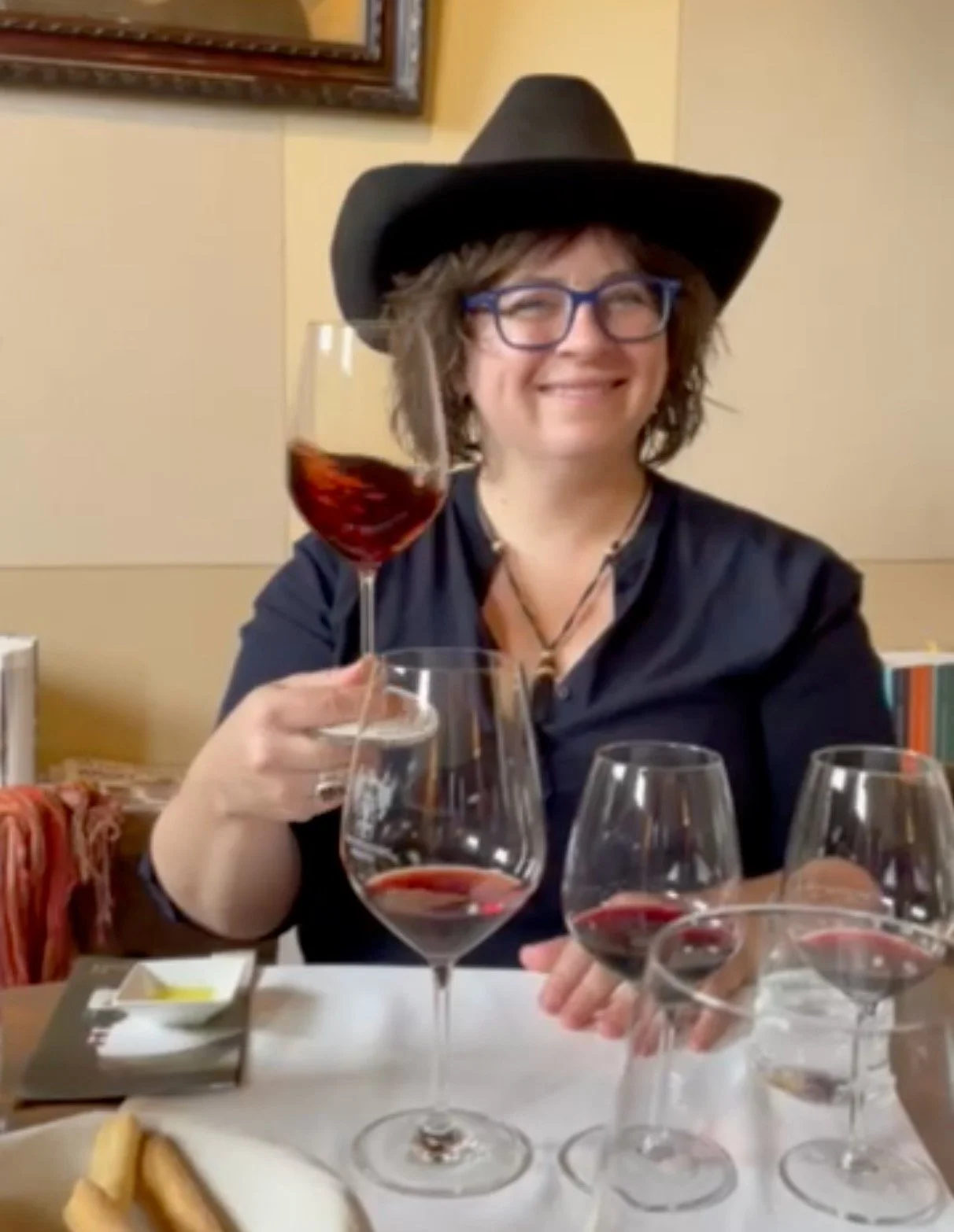
▷S4E13 Wayne Young Wants You To Drink Refosco
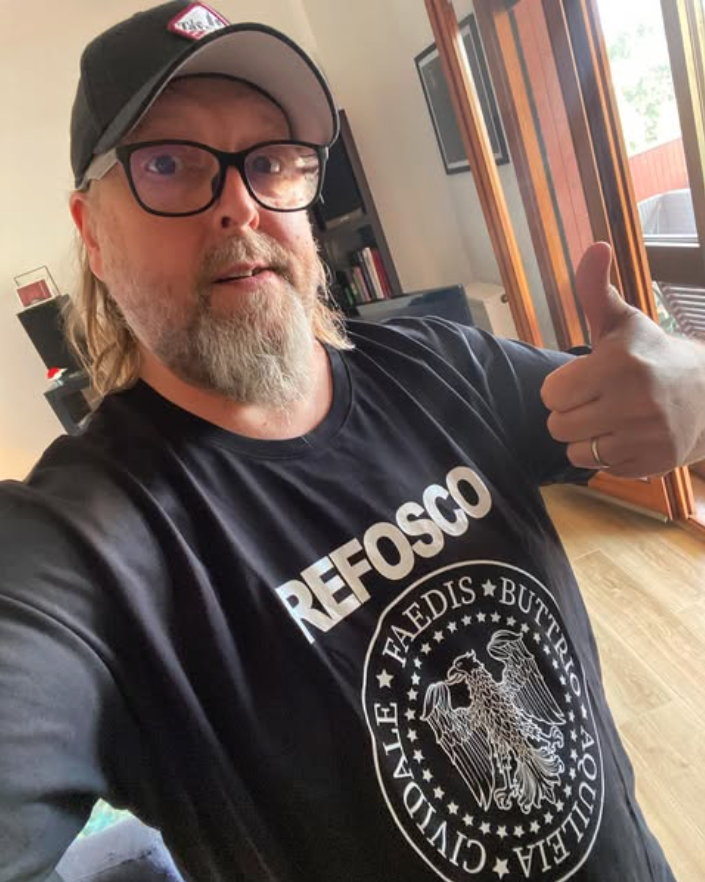
Wayne Young's show La Taverna is more than just a podcast; it's an oral history of the wines of Friuli-Venezia Giulia. Through interviews with the winemakers of this beautiful region in northeast Italy, some in English, some in Italian, Wayne is bottling the story of the region he loves so much he moved there from the US after working one harvest in 1998.
This episode references strong language as well as strong drink!
Note from Rose Thomas:
Wayne and I are doing a podcast swap! I interviewed Wayne on my show, he interviewed me on his! We know that our listeners appreciate Italian wines, so this is a chance to introduce you to a great new podcast. To hear about my travels in Friuli-Venezia Giulia and how my first trip there helped inspire the Modo di Bere project, go to
latavernafriuli.com
or search for La Taverna in your podcast player.
Subscribe to the newsletter!
-
And wine is such an important part of of the landscape here. Once you start going towards Cormon or you start going towards Chibidali, you're going to be driving through wine country. So you're going to be amongst vines. Even on some of the larger roads, you're going to just have vines along the side of the road on the stale. So you're going to see them there. So it's it's part of the landscape. And that's one of the reasons why I really love it here. And wine is always on your mind when you're talking and when you're traveling through freely Venencia Julia.
Welcome to Moto de B the podcast about local drinks and local sayings. I'm your host Rose Thomas Banister.
You might have noticed that season 4 of this podcast has been a bit of a theme of wine from Frei Vanetsia Julia in northern Italy. We're continuing the theme today with Wayne Young, an American wine professional who worked a harvest in for you Julia, fell in love with the region, married his Italian girlfriend and moved to Udina permanently in 2002. Wayne now has a podcast dedicated to the wines of Friolia Julia and it's called La Vera. Wayne and I are doing something special today. I'm interviewing Wayne on my podcast and he's interviewing me on his podcast. We're releasing both episodes on the same day because we know our audiences care about Italian wine regions and we want you to find out about a great new show. So before we start the interview, please take a moment now. Go to Apple Podcast, Spotify, wherever you get your podcasts, search for La Vera, hit that follow button thing, and download the latest episode. And I'm excited to welcome the fans of La Vera who are listening today on Wayne's recommendation. So, welcome, Wayne. Absolutely. Thank you for having me. It's a really nice experience to be here and it's really nice to uh to share a podcast with you. Yes, I am really happy. My first collab. Yes. Exactly. Cheers. Cheers. Cheers. To Italian wine shows and to the wines of Freely Vanetsia Julia. Exactly. Exactly. Exactly. What are we drinking here, Wayne? What are I don't know. What are you drinking? I am drinking um one of my favorite wines in Frei and also full disclosure a client. We're talking about Roni Dala. Nice. Okay. And this is their chalar ro which is their blended red wine. It's half scupino and half rafosco delp padunk roso which are my two favorite red grapes here in frevenia Julia. So uh yeah I figured I would open something red and uh and something indigenous for ourh our talk today. So I couldn't think of anything better than uh than chalar roa to to to drink with you today. I love that producer too. I love skopatino. I love the story about how that producer, right, kind of brought it back into stability in the region after it had been undersung and endangered. Um, it's just a delicious grape that makes these sort of soft in the mouth, very morbido in my opinion, as they would say in Italian wine tasting. Kind of dark purple wine, not too tanic, some interesting fruit notes. And then Rafosco for me is like drinking a Christmas tree. In fact, that's kind of how we met. We were both on like social media somewhere and people will ask like what's your favorite wine and you kept saying rifosco delunk roso and I was like I have to meet this guy. That's my it's my mission in life to make people drink more rifles. Well, I'm drinking a white actually. There's probably some skin contact here. And I'm cheating. Except I'm not. Because I went over to my wine section where I have some wine that I've brought home from my travels and I thought to myself, oh, I know that I still have a few bottles from Fly Vanetsia Julia. And you know what? They were all from Verda, but in my mind it was one thing. So maybe we can talk a little bit more about this kind of crossborder. In fact, this is uh why this is such a good um example is this is a Malvasia from Ferdinand um in Bura. And you can see that it has the well maybe you can see it. It has the the name spelled in Italian and Slovenian. And this producer, Ferdinand, makes a wine with a producer across the border, Gratishuta, a sparkling wine that they b they bottle under the EU designation to show, right, that they don't think that border makes sense to be there, which is a whole story. So it's and it's called Capenas without border. So that was one of the first wines that I heard about that made me want to visit this region. Um, and Mavazia is so aromatic and lovely and they grow it um all over Italy. Uh, they also have it in different kinds of Malvesia. It's whole family thing, but they're aromatic, luscious wines and more aromatic meaning floral and I love them. Not quite as aromatic as like a Sovenon or something like that, but still. Yeah. Yeah. More in the floral than the grass category perhaps. I always get notes of like um like irises in the springtime is kind of my malazia note which is pretty fun. But Wayne, I I want to know do you have I want to know more about your background and and what you do there. Uh but I want to also ask you if you have a local saying to share with us. A local saying. There's a couple and everybody loves it when I speak Italian because I speak Italian with a really heavy American accent. Obviously, you know, kind of like Arnold Schwarzenegger, you never lose the accent, right? No matter how hard you try and people find it charming, so I sort of take advantage of that. They find it even more entertaining when I speak Freelano. Oh, you speak Fulano? How marvelous. Very little. I know a couple of phrases in Freolano. So, I'm going to give you a couple of phrases in Freolano. The first one that you learn when you get here, if anybody teaches you Fulano, the first thing they're going to teach you is the way to say, "How are you?" And in Fulano, it's
exactly. But there's always a little addition on that. So basically what fulanos will say and what I've been taught is you say
what does that mean? Yes, it means how's your penis?
Oh, I'm always finding a new penis all over Italy. It never stops. Exactly. Thank you, Italy. And the the response is deaf. Okay. Translate warm but soft.
Oh my god, that's so funny. And I don't did you have you met any of the Petrusas? Paulo Petrusa who was a is a a friend of mine. He every time we see each other, he comes right up to me and he says and I respond. And he laughs his head off. He thinks it's the funniest thing ever. Oh my god, that's so funny. You're going to have to text that to me so I can make sure to spell it correctly in the subtitles because it's a really important saying. Oh my god, that's Oh, it's a very important saying. It's the first thing you learn in Freulano. The other one that I wanted to give you in Freulano is the Freulano phrase that basically encapsulates my life here in Freetsia Julia. And the phrase is
to us,
which means you're luckier than you are smart.
You have more luck than sense is the literal translation. You have more luck than sense. You know, I think it works out to a compliment to be real. The only reason that you're successful is because you're lucky, not because you're actually talented. So, well, that's probably true most. Here's what you got to do. If you want to find these fantastic freeo sayings, you got to go on YouTube and you have to look for this series of videos that were made. They're like a minute and a half each and they're called Tacons. T A C O N. And there's a guy there with a beard and um I can't remember his name right now, but I met him. He's a was a really nice guy. Unfortunately, he passed away, but he does these fantastic things where it says in Italian we say this. In Fulano, we say this, which means absolutely not the same thing, but it's it's very very funny and you'll get all the Freulano you need from those videos. Oh, that's wonderful. I'm definitely gonna link that in the show notes. Check it out. I also want to let people know since we are talking about Freulano that I have in this Fuli Vanetsia Julia heavy season, I have a a whole episode which is season 4, episode three of this podcast which is with uh Dr. William Chiselino who the dire who is the director of Arleth that promotes the Freulian language and uh it's all about Freana that entire episode. So if you want to know more about what language we're discussing you can go there but we're going to talk about some wine. So Wayne, you know what I would really love because we do uh also in this season I've got another episode that this marvelous very granular deep dive incredible scholarly resource incredible for people like me who go crazy about lots and lots of different um rare grapes which is the interview with Paul Balkke earlier in this season. I want to know more about your story, but before we get into it, I want to know if you can kind of bring to life for me just if someone was going to visit this region, like what does it look like? What does it feel like? What does it smell like? What are you, you know, what are these what is it about some of these wines and the way they taste that caused you to change your life? Give us some sensory freely. It's a it's a really weird thing because all of my life when I was growing up in New Jersey. I grew up in New Jersey. So I did not grow up in a place where there were real mountains. I grew up on the east coast. So we had hills which we called mountains but they weren't really mountains. And I always dreamt of living in a place where I could see snowcapped mountains from my house. And I'm living that dream right now because from my apartment I can see out my kitchen window, you know, Montenero and Montayur and all of these other mountains that are sort of surrounding Friuli that in these days are are covered with snow. So that's a big thing that I'm super grateful for when I when I think about my life here in Fuli is that I that's what I wanted to have and now I have it. But you know, Friuli has it all. Friuli has, you know, plains, it has rolling hills, and it has mountains. And it goes all the way from the sea all the way up to the the some of the highest peaks in in the the Alps. So, yeah, I mean, you're going to find everything you could possibly want here. And wine is such an important part of of the landscape here. Once you start going towards Cormon or you start going towards Chibidali, you're going to be driving through wine country. So you're going to be amongst vines. Even on some of the larger roads, you're going to just have vines along the side of the road on the stale. So you're going to see them there. So it's it's part of the landscape. And that's one of the reasons why I really love it here. And wine is always on your mind when you're talking and when you're traveling through Freely Venencia Julia. I live in the city of Udina, which is the biggest um Freulian city. Obviously the biggest city in in freely Venetia Julie is Trieste. Um but that's not sort of considered freely. That's considered Venetia Julia. Udin is is a little city of about 90,000 people. It used to be very sleepy. It was once deemed the most boring city in all of Italy, but it's not that way anymore. It's a young city. There's a there's a university here. So 15inute walk from my house. I'm in the center of Budina and it's full of wine bars and places to eat and places to drink and people having a good time and you know those are the things that you're for me are important now because I used to live in the big city. I spent 10 years in New York but now I just enjoy the calm, the peace, the quality of life that you get in a smaller city. So I can't think of anything that you might miss in a place like Free Levenia Julia unless you really want the big city. You live in the big city. So you know and I do miss the big city from time to time. But uh it's it's an easy trade-off with the with the quality of life you have here. So there's always good conversation. There's always people having you know cheti or or uh you know pieces of bread with with cheese and ham and all that sort of stuff. So, it's basically the the qual the thing that I love best about here is the quality of life. The there's lots of local food that I enjoy eating, but you can also find some things here like sushi, uh, which is very popular, or hamburgers if you're really wanting to have a hankering for for Italian for American food that is. So, yeah. I mean, I like I was saying, I don't think that if you were to come here, you would find yourself missing anything unless you're really trying to get into the big city. That's really cool. And I wanted to know too, a lot of times when I am visiting wine makers, it's a very rural experience and uh very small town experience. Everybody's kind of in each other's business, you know. Um Oh boy. Uh you know, and and of course that's very fun fun to visit, you know. I live in New York City, so you know, I've kind of chosen my lane in terms of like village versus city life, but it's very fun to be around and experience. But I'm just curious for you, how do you stay in touch with and what are you doing to to besides the podcast to find out about what's going on in wine? Do do the consorty have events? You know, are there wine bars where you kind of go to get the news? Like do you drive out to Cormon? Like are you going to different parts of the region and visiting vineyards? Like how do you stay in touch and informed for your viewers to let them know what's going on in the region? Well, the first first line is is contact with producers themselves. Um, I'm lucky because I have the podcast. I'm the only one who's doing a podcast about freely and wine. I'm the only one who's doing a a podcast about freely wine in Freuli exclusively. And so I'm constantly in contact with producers. If it's not about the podcast, it's about other events that I do. I also do events at a at a restaurant here in in Freeway that's called Elliot in Monzano. So I I help them plan the events and I do the events with them. So I'm I'm the one who's coordinating and contacting producers for wines to fulfill these events. I do have really good friends at the consortioali and that is where I have my studio. I don't do my podcasts here even though I have my my microphone set up here. This is more for my intros and my editing type of stuff. But I have like literally like a mini studio in the tasting academy at Kolor and Tali. So whenever they have things going on and Cody and Tali are super active as far as promotion and events and things like that, I tend to to go and and take part in those events as often as I can. In fact, there's there's one on Saturday. So yeah. So I'll probably be going to to to do that. So I'm constantly bothering producers in Frei. I'm constantly asking them for samples. Let's do an event. Let's do a tasting. Hey, I'm going to do a wine course. Let's do one of the lessons at your winery. So, yeah, that that's that's what's And plus, I consult for wineries as well. I I work closely with uh with Ron Dala. Um I've been working now for a short period of time with a guy named David De Ferzine. Since I've become sort of a a liberal professionista, so running my own business, I have to sort of be out and about. And whenever there's a an event or something, there was an event last week uh in uh in San Georg no something about wine tourism I was there just to you know hear what they had to say but also show people that I'm around. So yeah it's it's it's a matter of being in a lot of different places a lot of and there's a lot going on as far as wine's concerned in in freely. There's always a tasting or some sort of event happening.
So, you do some media, but you also do some promotion and you do some like market consultation, some events. That sounds really fun. It's a lot of fun. I mean, there could always be more work, but yes, it it is a lot of fun. And the thing that's the most fun about it is dealing with the producers is hanging out with them and helping them out, but also interacting with them and and becoming friends and hearing their sort of hopes and dreams and what they're trying to do and their focus and all that sort of stuff. So getting into the the the culture of of a winery into this sort of family situation for me is always always really important and always very satisfying. There's one thing that I can say about every Italian wine producer I've ever met is that nobody is resting on their laurels. Everyone is working so hard to make the absolute best wine that they can. There's so much innovation. There's so much hustle. People are flying all around the globe to get there small production wineries into Japan and New York City and everywhere. And I was just actually in New York City last night at the time that we're recording this. I went to an event with the consortio for pogrigio doc deleier. So it's like a okay multiple region dock devoted to pog grigio which to be honest wasn't so super on my radar even though I always tell people to try pog grigio from specifically but I was learning from uh Felix of that consortio there that they are the first doc in Italy that is very seriously considering allowing the peewe grapes in the blend and they just had a tasting two weeks ago of the wine signs from their experiment with these blends that are maybe 85% penog greia with then some some pei grapes in them. So that was really interesting. And he also told me that in Fuli specifically there is a little more golden color even in the non ramato non-skin contact pogrigio and a little more texture because they will like to hang the grape the penogrigio. They like to leave it for a full extra two weeks than other places that might be harvested in Venetto. And I didn't know that either. So I'm learning new things about poguio. But what are some of the other well before we talk about let's talk about a few grapes and then I want to about a few other questions for you but I want to talk about styles I guess colors of wine. So I feel and let me know if I'm right about this but my sense is that you know of course there's a long long history including of skin contact so called orange wines that was kind of forgotten and then revived but I feel like maybe the 80s 90s there were some producers like Marco Feluga that really worked to make sure that the world knew how nice the white wines of Kolio do for instance are in this region. So, I feel like the region was really known for the whites. And then kind of in the late like 90s, 2000s was this skin contact moment with Gravner and Rodicon and all of these cool producers that I got to spend some time with reviving this skin contact tradition. But what I don't hear people talking about as much is the reds. My god, are the reds nice. Has it always been that way or is this a climate change thing where it's getting a little warmer or are they're just I just found them to be stunners. I mean, every you know, just a glass of Cabernet Franc, I'm like, "Wow, this is so good." Well, the the reds have always been good here. I think it's just one of those things that freely understanding that it would be really difficult to compete with Piedmont and Tuskanyany um said, "Well, we do have some really really really good red wines here, but let's try and let's try and go for the the softer market maybe." Um and knowing that white wines really worked here and especially um that ponka soil that flashy hormones. So that really made some very special white wines. So it sort of became branded as the the land of white wines and that's how Frei became famous. Uh Frei was for for many many years a very poor region. You know it was the destroyed by two world wars. The wine history here is both old because it goes back to pre- Roman times, but also young because everything had to be restarted after after the wars. Everything had to be replanted. Everything had to be started up again. So when it went through that restart process, there was a lot of sort of shifting over to ideas that might have been a little bit more financially less risky, a little bit more financially stable. So, let's do things like pinog grigio and merllo that are easier to grow and let's pay a little bit less attention to things like pinolo and scopino that could be a little bit more difficult. So, harder to make, harder to market, harder to make, harder to market, harder to grow. So, all of these different things. But then what really sort of changed here was there became a sort of Freulian style and that filtered in through Germany and Austria which was this idea of stainless steel temperature controlled white wine making where the flavors were super clean, the wines were super fresh, no, you know, no oxidation, no time in wood because that was sort of muddling up the flavors because people weren't really sure how to make bur Barique wines here for a while. Skiopetto, Mario Skiopetto was probably one of the guys who spearheaded that along with Livio Feluga and Marco Feluga, but there were other producers as well. There's probably, you know, a half a dozen producers that sort of carried that for Puyatti was probably another one. So that became the Freelian style and that sort of put Freely on the map. So Freely was known for these incredibly clean, fresh, variety correct, very welldefined, fruit driven white wines. So that makes how they became famous. That makes it so interesting when you think about what it must have been like when this handful of producers started making orange wines. They talk about like, oh, everyone thought we were crazy. But when you hear that that's what was going on and that that was working so well, you can kind of see how revolutionary it must have been when when when those guys started doing that. Absolutely. Absolutely. And you know, the idea was to sort of go back to a sort of pre-industrial feeling for the wines. Whereas if you think of a wine celler full of big stainless steel tanks, you kind of get this image of sort of an industrial kind of environment. So they wanted something that was more that they remembered or their grandfather remembered or their father remembered or whatever that was the way that you made wine in Fuli. And they started experimenting with, you know, leaving some the fre pog grigio on the skins for a little while, just getting that also where the skins come up and you get a little color out of it. Or traveled to Georgia and started tasting wine uh Georgian wine that you know long merated stuff and he was like that's the way you make wine and brought that back here and started a revolution. So yeah, it it was extremely revolutionary to sort of come back locally and for sure, you know, other places too. I remember Raticon I I was able to interview the Raticon family and they they told me that their dad would make people taste it out of black glasses to just say for God's sake, forget about this color that's freaking you out and just taste what I've made. Yeah, Radicon was uh was was a trailblazer even before getting into that whole long masseration type of style for sure. If you're a wine geek, you're going to be into into those bottles. And of course, now everyone the orange wines are everywhere, you know, and everybody got excited about it and they're making they're making them in Australia and everywhere else, you know, and it's a whole new category.
Let's talk about some of those red wines that that you love. Tell me why you love Rifosco so much. Why why are you making such a thing out of it? It's a good question. I like that question. Um, so of all of the indigenous grape varieties that we have here, um, the the three biggies there there's also there's a couple of smallies, but the three biggies are pino, skopatino, and rifosco. And Rifosco is a family of different grape varieties, but the one that's the most important is Rafosco Dal Padunkos. So there's also rifles defis and rifals rifosone and two but anyway the the the one that I'm most interested in is riflesco dal padunco and why is that because skupino and polo are great wines they're fantastic wines but they do best in very particular places so for example scopatino in a warm place like brio will tend to lose its spicy character. Okay, pinolo in a cool place like pooto will never ripen and the the the tannins will never will never round out. So you need to plant pinolo in places that are very very warm with lots of sun and you need to plant scapino in places that are a little bit cooler. Rifosco you can plant anywhere. Rifosco you can plant in the plains. There are fantastic Rifoscos that come from Aquilea, which you could arguably say is the home of Rifosco del Padunka Doroso. So, we're talking about the plains and a very different type of soil, very aluvial, lots of rocks and clay, but different from the hills, but then you get into Koloriental and we're on the Ponka and Rafalsco is also fantastic. There are great rifles that comes from, you know, Iso which is another aluvial area out near Port Denon, another area. So there's almost no place in Friuli where you can't make a really good rifco and for me that's sort of the key. I love the fact that pinolo and caputino are very specific but the fact that you can make great rifosco delpadunoso almost anywhere in the region makes it more interesting for me because it can be sort of the standard bearer for for Julian red wine. That is so interesting. Since it's so versatile, do you see Rafosco being a great group of grapes for experimentation planting around the world? Has has that happened? Would you like to see that happen? I would love to see that happen. It has happened. I know that um Randall Graham experimented with Rafosco de Padunkoso in California for sure. There's Rafalsco in in Australia. I know that it exists. So yeah, I think it would be very very interesting, but you need a lot of experience with Rafosco to sort of understand its its uh its its ins and outs so to speak. So I would I would definitely say yeah, Rifosco could be really really interesting and it could only be good for Freeline Rifosco because if you have a bunch of producers in California or in New York State or in uh in in Oregon or Australia or South Africa making Rafalsco it's going to come back here eventually. Somebody's going to say, "Well, where is Oh, it's a native of Friuli. Where is Freuli?" And people are going to sort of research and follow that trail back to here. And that's happening with the Scupatino and and Pinolo as well. All right. Experimental planting vineyards of the world. Take notes. There you go. And in Bordeaux, right? All the people experimenting with you. Great. The world is your oyster, guys. Just get out there and plant some some Rafalsco and some Skupatino and some pino. For sure. I think pinola would do great in a place like Napa Valley. Maybe better than Cabernet. Soon because it is it is very very structured and it needs a lot of sun and it needs a lot of heat for it to ripen and I would be really interested to see what something as difficult as pinolo would produce in a place a warm place like Napa. What are the what are the tasty notes for you that define a typical pinolo? Polo. Well, the you know I always taste in terms of structure and the thing about pinolo is it always has this incredibly rich tanic structure almost difficult to to get through at times very dark fruit very very deep lots and lots of breadth but not a lot of alcohol you can have really really alcoholic pinolo but there's so much acidic support on pinolo that it doesn't seem syrupy and I think that's really really important all of the wine here, whether they're white or red, they always have sort of this kind of energetic backbone to them. And pinolo, even though it's very very tanic and can be very very ripe. And even there are some ones that are the fruit is dried to give it a little bit more plushness, the the the acidic character always always comes through. So you're getting this black fruit, but with the support of the the acidity. I've heard people compare it to Nebiio. Do you think that's because of the tannin or because of a complexity, because of a development with age? All of the above? All of the above. Um, I've done comparison tastings with with Nebio and with Pinolo. Nebio is is definitely lighter in color. You can tell them apart very easily. You can, you know, if you put a Nebiola and a pino together, pino tends to be much much darker. But yeah, they are both quite tanic. Maybe Nebiola has a little bit more acidity, a little bit more elegance. I mean, nothing to say bad about Pinolo, but you get a little bit more of that sort of earthy tarry edge with Nebiio that you don't really get with Pinolo as much. So, yeah, they they compare them because I think they're both incredibly well structured, incredibly ageworthy red wines, but I've I've I've yet to find sort of that comparison between the two. What I think is closer in character is Scupatino and Pon Noir. Oh. Oh, interesting. Tell us about that. R I Y L. Yeah, because Scopatino Scupatino is is not a dark skinned grape. It's not a thick skinned grape. There aren't a lot of tannins. It is particular. It's a little bit fussy about where you put it. It's quite transparent. It does really show where it comes from and all of those characteristics you could find also in pon noir. I know a guy in Propul who makes both pon noir and scupatino and he he loves to tell the story that when he's pulling the the the the merated grapes out of the tank to go into the press, he always has a moment of doubt whether or not he's opened the right tank. He was like, "Oh, wait a second. Am I doing the pon noir or am I doing the scopatino?" just from the smell of the wine and the grapes that are coming out of the the tank. So, I think that there's more of a a kindred sort of feeling between wines. The structure is very elegant. It's not a big brrawy muscular wine. Neither one of them are like that. If I had to sort of say there's a there's a real sort of brotherhip between an a local grape variety and an international variety, it would be Scapatino and Pon Noir. You know, I've got another I've got another thought for that just because I really am intrigued by and love Skuopatino. I almost think of it as a lighter, less tanic Merllo. It's just got such a friendly dark fruit character. To me, it's like if you took a Merllo and made like a baby version that was, you know, not that Merllo is among the most tanic grapes, but to me, it's got such a unique character among the lighterbodied kind of purpley grapes of Northern Italy. You get a lot with a strongly floral character, especially across Piamonte, which is I love those. You've got skava for instance and a lot of love those grapes with a very distinct note of white pepper. So there's a lot of kind of vibrancy and personality of a certain kind of picquincy or like in-your-face floral expression among a lot of those grapes. And then you've got ski patino. And this isn't going to sound very elegant, but when I was trying to say with my note about the unique fruit, there's something about it that reminds me of like canned peaches. Like I canned peaches, you know, and you know, maybe you've never eaten a canned peach if you're Italian, but there's just there's a thisness to it and the fruit to me is kind of unique. There's this round feel. I'm speaking specifically of the Ron Dala wines and I just it's just not quite like any other wine that I've ever had and it's not quite like any other Italian wine that I've ever had. There's something kind of red about it and um you know a lot of Italian reds are just dominated by acid and tan and so much so that I'm almost kind of I'm like an extreme sport p sports person and then when you ask me to drink wines from the rest of the world I feel like I'm playing golf and I'm like all right where's the tannin like where's the acid it manages to be low in I think both of those things I would say maybe lower acid certainly than than a penis you know, or a nebulo. But, uh, yeah, I don't know. And and maybe other people taste different things in it. I'm sure you've tasted many more than I have, but I've always found it to be kind of an odd duck. Scopino. Yeah, it it is. Yeah. In a way that I It's a duck I love. Right. Yes, it is. Genetically, it is very very different from every other variety in Frei. There are no known parentages or lineages genetically with kilopatino with any other grape variety. There might be one but I can't remember which one it is. So it is quite different. It is very very old supposedly due to the vigor of the plant and the way the plant loves to climb and the way it grows very vigorously. There's a a part of it that's that's thought to be closely related to very ancient, very sort of wild vines uh that haven't changed much over the past 5,000 years or so. So, it is an odd duck. It is a different wine. Bunches are really big, grapes are really big, skins are really thin. Um it's quite susceptible to paranospera. So, you really have to know how to grow it. But I think it's one of those things that when it's done right, and there are a number of producers here who do it right, it can be sublime. So I I I I really appreciate that. Um I'll try not to tell them when I think it tastes like canned peaches. I've kept that one to myself context. Thank you. You got You're welcome, everyone. That's my confession. Canned peaches. Well, you know what? They they'll say, "Okay, well, yeah, maybe I can understand why you might think that, but it's it's that impression of freshness that you get from from from Scopatino that you don't get from a lot of other wines." the the one reason that I would sort of call it a little bit different from Merllo, but again it sort of falls in line with what you're sort of saying about being a baby Merllo that Merllo tends to be quite full and rich and tends to have a little bit more alcohol whereas Cupino tends to have much less alcohol is not quite full and quite so rich. So yeah, I could understand why you could say it's like a sort of a a mini version. It's because of the fruit really. That dark the friendliness of the fruit. The dark fruit. A lot of Italian reds are dominated by red fruit. Red, red, red, red, red. And then you have this kind of plummyy blackberry core. I'm so glad to know that it's also genetically unique. I feel like I'm I was on to something. But let's talk about You totally are. Well, let's talk about Thank you. Well, let's talk about some of the whites. Describe to me some of your favorite whites. And I really want people to go and try these. So tell give us your tasty notes. Give us the way they make you feel the things they remind you of with some of your favorite freelian whites. Well, I can't start talking about Friuli and not talk about Tokai Folano, which now we just call Freolano. And I think that Tokai was my first love when I got here. And uh as as much as there is other great wines here, there's something about the the nose of tokai, even if it's it it can be slightly reduced. Best examples of tokai freolano that I've had always sort of come out of the bottle a little bit stinky, but stinky in a good way. Explosively aromatic, but not grassy aromatic, just fruity aromatic. They're just so beautifully lush and long on the pallet. Um, they are big wines. They can be alcoholic, but you can combat that with skill and with patience. You have to make sure that you you pick at the right time. So, I really love the the idea that Friulano has like this nose that comes at you with like flowers and ripe fruit and almonds and all of these different things that you don't often find in in white wine. And then on the palette you have this richness that gets canceled out not necessarily by acidity because Tokai Freolano is not a wine with a lot of acid but it has more richness and that little snap of bitterness on the end that that green almond bitter that I love. I love you know I love Amadi. I love black coffee. I'm one of those weirdos who likes bitter things. So yeah, I I really really appreciate Tokyo as sort of the the standard bearer for native white varieties here. But but beautiful tribute. Thank you. I completely agree. The real future of Freulian wines is this movement that's going towards this blend of Tokai, Malvazia, Ribbola Jala. Oh, a blend. I thought you were going to say Rebola Jala because they were really promoting that just a few years ago which I was kind of like I got the versatility. I tried some really nice ones but then I would always pick the Fulano out of the lineup. So tell me about this blend that's kind of news to me. There there's a big movement going on in Kolio which was spearheaded by Christian Keber and the idea was that they wanted to make Kolio Biano but Kolio Biano many many years ago sort of had this this idea where you could blend anything that was allowed to be grown in Kolio into Kolio Biano. So you could put in Sovenignon and you could put in Gvert's Trainer and you could put in Chardonnay and you could put in whatever you wanted to create sort of your house wine your your your specific blend and for many many years in Fuli those wines were always the most important wines vintage tunina ter wines like that were sort of okay everybody had their varietal wines so you had your tokai your soven Chardonnay blah blah blah but your best wine was a blend but everybody's blend was different. Yes, everybody's blend was different and that was and that was considered an an advantage because you could sort of create something that was uniquely yours. When I worked at Bastionich, it was Vespa Biano Chardonnay Sovenon, a little dash of picolit. Everybody was making like their own sort of house blend. Christian Keber and started thinking about this idea of let's concentrate more on local grape varieties and those local grape varieties are ribbola jala malvazia and uh tokai freeo and let's make a blend of that and say okay we got to limit ribbola jala to a certain percentage we got to limit tokai to a certain percentage because we don't want the wines to be too different you can vify them however you want you can put them in uh wood or in afra or in uh in stainless steel whatever you want to do concrete, whatever you want to do. But those there's like some loose parameters there that you have to sort of fall into. And I think those wines are absolutely fabulous. I think those wines are the ones that more easily define what's going on here. And I see more and more even in Berda people sort of going toward that blend. And I think that's really important because what's going to happen is if that sort of standard takes off, you're gonna have a a particular Freuli and white wine that's going to have a bigger impact on the market. You're going to have people are saying, "Oh, okay. That sort of three grape blend from Friuli is really freaking good." And no matter who you get it from, you're going to be happy. the one that I tasted most recently that really knocked my socks off and I even posted something about it on Instagram. What where I basically said wines like this were the reason that I fell in love with Friuli is a producer in Colio called Corsich with a K. And he was nice enough to give me a bottle of his local blend. I loved it. I mean, it's energetic and it's rich and it's acidic and it's ripe and it's got everything going for it because acidity from ribbola jala, freshness, lightness, that's what Ribbola Jala is all about. Power and and aromomas and richness from tokolano and then malazia, you get the flowers and you get the aromomas. So there you put those three grapes together in the right way. That's super special. Wow, that's so exciting.
So Wayne, you and I are obviously gaga for the indigenous grapes, but just like quick note for everybody that the you know the French international varieties have been in this region for a long time and some of them have a really special expression. I really like the Merllo. I really like the penoblanc. Um uh so you know you will see two of my favorites as well. also some fascinating savon blancs chardonnese grown on that uh ponka soil and if you want to get somebody who isn't that grape adventurous to try something new when I was working in in wine service I would often try to recommend for instance a savlblanc or a chardonnet from this region to kind of or a pino gregio but what about some of the late harvest the wines the grapes that are vified into the late harvest style because those are so special M so we're talking about the sweet wines verduto picolit verdutudo picolit yeah there's so and you know it's not just that there are other grapes that people sort of push the limits on as far as ripeness is concerned pic picolit is is probably and I just spoke to Marco sada about this today it's such a special grape variety it's such a difficult grape variety but it was quite literally the the wine of kings for a period in in Europe I mean there were noble people from Friuli and from Venetto who were bottling this wine before wine was usually put into bottles and sending it as gifts to you know the courts of the most important places in the world in in Europe rather. So yeah I mean there is a a certain elegance and and beauty to to Picolite that I don't think any other sweet wine can come close to. I don't understand why when we talk about sweet wine in the world, we talk about, you know, Sultan and we talk about uh Tokai from Hungary uh and we don't talk about Picolit because it is one of the great sweet wines of the world. The problem is is it's sweet. People don't really drink a lot of sweet wine. Don't worry, I'm on a single-handed mission to make sure that late harvest dessert wine becomes the hot new thing in the culinary experience again. Like I I won't let it die. So So that's why I wanted to ask you about Please help. Yeah, please help. I'm on it. They're so delicious. We just opened one. In fact, I had a a very fancy wine party. I made some steak and I had a a new friend of mine, old friend of my husband we reunited with and didn't realize that he had such a cool wine collection and he brought over some 1998 Hermit Tage and you know we drank some really cool wines and and people were kind of busting out their own contributions to keep up with those bottles. I opened my Verdut ride my 2014 Verduta. God, it was nice. I think I I hugged it a little bit. I'm not going to lie. What was the reaction of the people at the party to the Verdudeo? I'm really curious. Well, um, it was a pretty savvy group of people. So, especially my friend Noel, who's a psalm in Boston, you know, she was familiar just, you know, rapture rapturous delights. Really, if you don't drink late harvest dessert wines, you're missing out on rapturous delight. So, so don't do that to yourself. I agree. I agree. You know, I I did a a I did a an episode about Picolit for the consortio. And the thing that I tried to impress upon the people who live here, I mean, so I'm not talking about Americans, I'm just talking about people who live here, is that we should never ever go home without opening a bottle of picolit. The end of the night should be a bottle of p or or or it could be verdo. Both of them I think are equally valid. styles are different, but at the end of the night when you're about to sort of like, you know, maybe we should start going home. Everybody's got to stop and say, "Hang on a second. We can't go until we open a pic." Even if it's just a half bottle and there's six of you and you just have like that last sip before you leave the party. It's just it's just it's magic. I mean, sweet wines are so beautiful. They're always so highly rated. And if you talk to anybody who knows anything about wine, they always go, "Oh, sweet wines are sublime." But for some reason, we have this idea that like sweet wine's bad. Please drink more verdo. Please drink more pickle. Yeah, lots of thoughts on that. But don't worry, you can go to my magazine, Moto Demagazine. The editor of the magazine, Michelle Thomas, has released the the first installment of what's going to become a whole series about sweet wines. I helped inform the creation of a sweet wine brand from Italy that's now being sold in Nigeria and across West Africa. I had been wanting for a long time to see somebody give people who like sweet wines more quality options, you know, because it doesn't really make sense to compare the cheaper sweet wines on the market with a late harvest. Those are such different things. Um although I think that it was the the reputation of the former that that dragged down the latter along with the dinners getting shorter and you know a little toxic diet culture in there as well. Sometimes things get so popular that you know there's kind of a swing and I I will say it's difficult when things get really popular in a cheap category that's being made in a way that can be scaled and cheap because what happens then is the branding of it begins to define an entire country region style or grape. This happened with Pog Grigio like once you realize that most of the Pogrigio and of course I was just speaking with the people from that consortio for pogrigio last night and they're decreasing plantings they're experimenting you know the qualities there but there have always been great pogrigio it's not pogrigio's fault you know pogrigio is a great grape it's all about what you do with it right so absolutely and you know the same thing with bojlet nuvo or whatever you know like you know or even just something that comes out of style just because it became so popular that people were ready for a change.
I heard on your podcast that in the new year you're going to be doing a series of interviews with wine makers on the Slovenian side of that border that's geographically connected, historically connected to the eastern freencia Julia region. So, we will just direct, we won't talk about Bura today. We will direct people to your podcast in the new year. But I have one or two last questions for you. Real quick, I want to know more about the Bastiana Group. What was your work that you did with them? You you've mentioned it a couple of times. I I started with Joe as a sier at his restaurant in New York, which was called Beco. It's still called Beco. It still exists. That happened after I left Wine Spectator. So, I left Wine Spectator. I wanted to get a a more dynamic job. I was s sick of sitting in a cubicle and I called a friend of mine who I went to wine school with a guy named Dan Pearlman. He was the soet at that point of Feldia and that was Joe's mom's restaurant. It was Lydia at Bastian's restaurant and he said we're not looking for anybody here but I think Joe is looking for someone at Beco. And I was like who's Joe and what's Beco? I didn't know anything about it. And so I met with Joe and so I worked as a somay there. I went in there. I never worked in a restaurant before. I never carried a plate in my life, but I did go to someone school when I was going through WCT and so I knew a little bit about service. He said to me, um, do me a favor, put on a suit and a tie, come back next Wednesday and, um, do service. Here's my wine list. Look it over, get to know the wines a little bit, and then come in. So, I came in at 8:00 after the pretheater rush. And I just walked in with my suit and I had my, you know, my my my corkcrew in my pocket and he he just waved me and he said, "Go sell wine. Just go." That was my trial. And I just went up to the first table. Can I help you with wine? I just started walking around the room and you know, whatever. What am I supposed to do? And so I started grabbing bottles and opening wines and serving and doing all this sort of stuff and whatever. And then about an hour, hour and a half into it, he waves me in and he was like, "You've never worked in a restaurant before." I was like, "Never worked in a restaurant before." He's like, "You're a natural. Start Monday." But I had to learn how to like I couldn't work as a somay until I learned how to work as a waiter. And so I worked a week as a waiter carrying plates, taking orders, putting in orders into the computer, all that sort of stuff. And then I could sort of move on. I did that for about three years. And then I decided that restaurant life wasn't for me. And Joe had just bought his vineyard in Frei in 1998. And he was like, "Do you want to work in a winery? You want to go work in Italy?" And I was like, "I don't know." And then I called my ex-wife and she was like, "You got offered a job in Italy?" And you said, "You don't know. Just say yes, you idiot. Go. How many times in your life is somebody going to offer you a job in Italy? Just go." And I was like, "Okay." So the next day I went in and I said, "Yeah, I'll do That was July 15th or 16th and I was in Frei on August 31st and we started the harvest on September 1st. So that's how I got here through through the Bastian family and then I worked five years in the seller, left the seller for a period because I couldn't deal with seller work anymore and then I went back as um communications manager from like 2007 until 2021. this uh current incarnation of you as a podcast host and everything else. Was that kind of a a COVID thing? Because it kind of was for me. We can talk more about it when we switch and you interview me, but uh so you kind of uh were you able to kind of find a new a new passion, a new new direction where you got to talk about wine, which you are clearly really great at. Thank you. Thank you. I think my passion for for talking about wine and this new sort of chapter of my life came because I I sort of felt like I needed to to to move on from Bastionage. And I I loved working for Bastion and it was something that I said to Joe multiple times that I always treated that winery as if it were my own. And I traveled a lot and I was in the States for two two and a half months a year promoting the wines and you know I was the guy who did all the visits and tastings at the winery. I I really really was was emotionally attached to the winery, but I kind of felt like my time there had come to an end. I wasn't sort of progressing any further. Things had changed. The sales director left, so it was just I just felt like I needed a change. And then COVID came and that was the push that I needed to sort of move on from there. What happened during COVID? Clubhouse happened during COVID. And so everybody was on Clubhouse chatting. And so of course I fell into like the wine groups and I hanging out with guys like Matthew Horky talking about wine for 24 hours a day, seven days a week because we didn't have anything else to do because we were stuck in the house. And then I was like, why don't I do a podcast? And I actually did a podcast a long long time ago with my friend Matteo and the the technology wasn't there to do a podcast well. And now the technology is there where an idiot like me can actually put together a podcast that doesn't sound like it was recorded inside of a an empty freight container. Well, you don't you don't seem like an idiot to me, no matter how lucky you are. Well, I'm an idiot as far as you know, technology and and and you know, sound design and all of that sort of stuff. So, you know, when you want to do something, you just learn. You know, it was weird for me because I was this musician. I was really used to being around recording. It wasn't so foreign to me, but I had never been the one hitting the button. So, I had to learn that, too. But my last question for you and then we should switch because we're I'm going to get interviewed on your show. Everybody, go to if you want to see the tables turned and me answer some questions. You can go, not that, you know, not that I don't talk and tell you what I think on this show, but you can hear more about my whatever he's going to ask me about on Wayne's podcast, La Ta. Do you have a website or anything Wayne that people can can find you at or should they just look for lati and then it can be either.com orit one or the other loti we will put that in the show notes. Please visit Wayne and I are really trying to help each other out here. So go over there and check out his show. Download an episode, hit follow, share the love of people who care about this stuff. If you care about this then I will say uh I found it really cool too. Another thing that we have in common is that we both have episodes in English and Italian. A lot of your episodes are in Italian. So, if you're someone who speaks fairly good Italian and you'd like to practice, that could be a really good way. I know I partially learned Italian from listening to some wine podcasts. Um, and that was really helpful to me. So, that's there for you as a tool, but he does have some episodes in English as well. So, Wayne, is there anything else you want to add before we wrap up and switch over to La Vera and uh do my interview? I I think yeah. No, I think I think we we've covered everything. I think one of the the most important things that I've learned going with the flow of this sort of change of of life during COVID and and taking on new things is to keep in mind something that someone told me a long time ago, which is done is better than perfect. And that's kind of the the philosophy that I've always had with my podcast is just, you know, if you're going to sit there and like tweak every little sound and every little detail, you're never going to get it done. So, okay, get it done, get it published, get it out there, and in the next time you can improve a little bit more. And I I feel that my podcast has improved over four years. So, done is better than perfect. Something about the the podcast publication schedule that you guys are waiting to hear what I'm going to do next has helped me to to to to work through some of that perfectionism as well. So yeah, learning is about making mistakes. Learning is about trying new things. It's about not worrying about looking silly as much as you worry about accomplishing your goals. So right, get out there. Don't worry. Everybody's just thinking about themselves anyway. Anyone who's going to be that judgmental is just missing out on all the finer things of life. The joy I don't want you to miss out on those things because you're worried about whatever who thinks I mean life is short, you know. Wherever you go and whatever you like to drink, always remember to enjoy your life and to never stop learning. Support us on Patreon. Grab the newsletter at motoberry.com and subscribe to the YouTube channel at Moto DBerry to watch the travel show Moto DBerry TV. Music for the show was composed by Ursilia Prosper for the band O. Purchase their music at the link in the notes.
Music composed by Ersilia Prosperi for the band Ou: www.oumusic.bandcamp.com
Produced and recorded by Rose Thomas Bannister
Audio and video edited by Giulia Àlvarez-Katz
Audio assistance by Steve Silverstein