▷S3E7 Brian Gelletly, Barista Trainer, Spits Out His Favorite Drinks
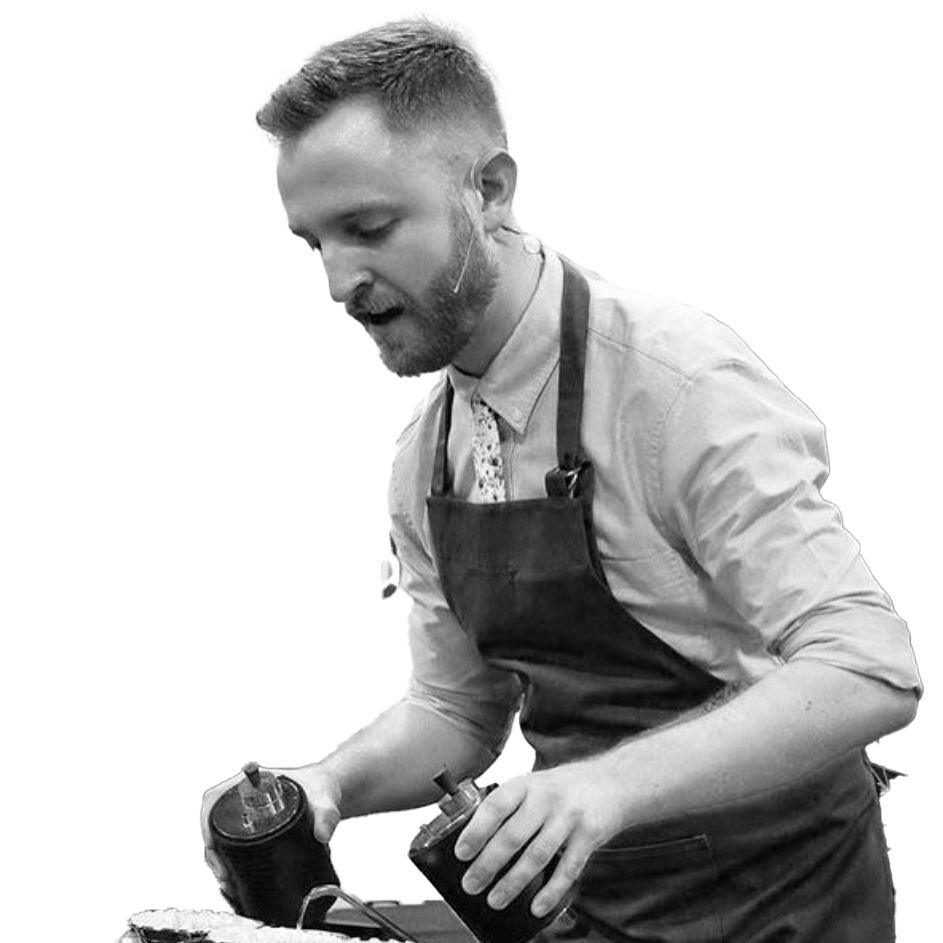
Brian Gelletly is a barista trainer with a sensitivity to caffeine. Brian and Rose Thomas share the secrets of beverage professionals who spend their days spitting out their favorite drinks In Modo di Bere's first episode about coffee. They divulge specific spitting techniques, from spittoon styles to mustache technique, along with general advice for avoiding machismo and protecting your health as a student of liquids.
Brian and RT consider parallels between coffee and wine in terms of biodiversity, climate change and sense of place. Brian spills the beans (or the seeds, actually) on what a coffee cherry tastes like and his one piece of advice for improving the espresso you brew at home.
For local language, we're in Philadelphia. What's a "jawn," how to order a beer in Philly, and why do residents refer to the water as "Schuylkill punch"? Brian is an educator and he beautifully explains the answers to these burning questions, along with coffee basics such as the difference between "coffee" and "espresso," why Italian and American coffee taste so different, and how to evaluate a well-pulled shot.
Subscribe to the newsletter!
Come for the information and stay for the joy as Brian and RT talk about the wines and coffees that gave them shivers and inspired their devotion.
-
BG: Kind of in a similar way that drew me to wine and coffee, just like this sort of visceral pleasure, this like deep sense of like this is amazing, like this is something very special. Like when when I would listen to certain pieces of music and be moved to having shivers, I just wanted to understand that better.
[Music] Welcome to Modo di Bere, the podcast about local drinks and local sayings. I'm your host, Rose Thomas Bannister. [Music]
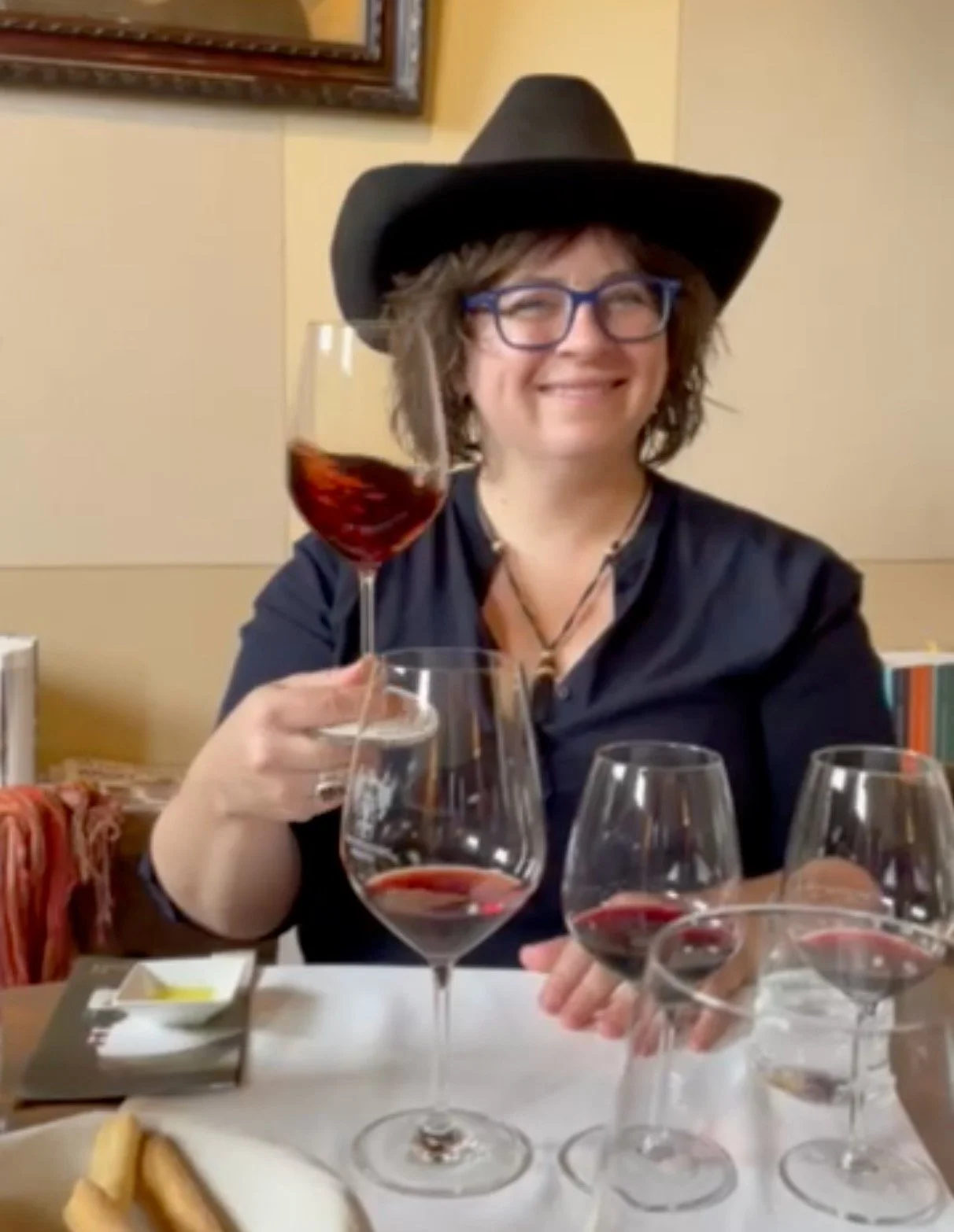
RTB: My guest, Brian Gelletly, travels around every day educating people on how to properly make coffee. Brian, when we met, we discussed the entertaining reality that the more you get into beverages, the more you end up spending the entire day spitting out your favorite liquid. Yes, it's a thing, people. It's really fun. Brian's going to talk to us about life as a coffee taster and teach us how to taste coffee like a professional. Brian, we're also a big fan of cocktails, beer, and wine. But before we get into your journey as a student of liquids, I like to start the show by asking my guests for a local drink and a local saying. Brian, where are you from originally?
BG: Cool. So, I grew up in Pennsylvania. My childhood mostly in South Central Pennsylvania, South Middle, but then I moved in when I was 18 to Philadelphia and spent 10 years of my life in Philly. I feel like Philly has been a big impact on like who I am today. Yeah. Then I moved to New York when I was 28.
RTB: Oh man, Philly. I love Philly for like the local accent and everything. Do you remember any kind of kind of Philadelphia sayings that you can share?
BG: You know, I'm really terrible about doing accents, but um of course there's always the like the term "jawn" like for any sort of thing you wanted to refer to. Um talk about "wudder", drinking water.
RTB: What's a jawn?
BG: Jawn. "Jawn" just means like you can use it as a word to describe any sort of noun like you know, can you pass me that jawn over there? Potentially from the word joint like, like—
RTB: Oh, funny.
BG: Yeah.
RTB: Is it like does it mean like thingy?
BG: It means like thingy.
RTB: Yeah. I have heard that before, but I I don't know if anyone's ever really explained it to me.
BG: Yeah. The phrase I was thinking about sharing with you today is I've heard some people when I was living in Philly describe the tap water as Schuylkill punch. What? Which might need a little bit of background to understand what they're saying there. But in Philly there's two main rivers that pass through the city. There's the Delaware Delaware River on the east side. Snd then there's the Schuylkill River that goes through more on the west side, a smaller river between the two. But the Schuylkill River does have some water inlets to like into the water Philadelphia water system. And especially as like a person coming from the coffee background, like something I was exposed to a lot more as a barista was thinking about water quality. And Philly is famously like not the best tasting water in the tap. Like it's very healthy. You know, you're not going to get sick if you drink the tap water. But it does have a a flavor to it. Not quite minerally in the way that we refer to in nice wines, but there's definitely this sort of like maybe chemical, maybe like rocky taste to it. So some some locals uh lovingly refer to it as like "Schuylkill Punch" which I think is also kind of interesting because in the liquor world sometimes we talk about like liquor like compare it to water like eau de vie whiskey
RTB: Meaning water of life.
BG: Yeah. Or aguardiente, angry water spicy water. Yeah. But this kind of like is the opposite direction like thinking about water as a cocktail or as a some sort of alcoholic thing because maybe in like a not so flattering way.
RTB: Schuylkill.
BG: Schuylkill. Yeah. Yeah. That's also got a uh I definitely before I myself relocated to the east coast from the Western American Western American Midwest. I think that was a word that I would not have known how to pronounce.
RTB:So, how is that spelled?
BG: Uh, let me see if I can think of it on the fly. S c h u y l k k i l l. It's from Dutch.
RTB: Schuylkill. Schuylkill.
BG: Yeah, it looks like skoy kill, but people say Schuylkill. Apparently hidden river in Dutch. Hidden river.
RTB: Oh, okay.
BG: Like Fishkill is like "fish river," right?
RTB: Okay. Schuylkill Punch! Here we are again with with water as our water as you would say it.
BG: That's right.
RTB: I kind of want to ask you about the water in in as a barista and the water quality because I'm sure that makes a big difference. But maybe we could start by telling me a little bit about your path into beverages as a career.
BG: Cool. My path started well I guess technically started when I was in high school. I worked very very very part time like twice a month at a local cafe because it was a bookstore cafe in my hometown and I wanted to be artsy and it seemed like a cool hangout and the boss was this guy who seemed to like know a lot. He's very softspoken but very smart. So I asked if I could get a job there and he let me work there some pulling shots but not really knowing you know he trained me trained me some but definitely a different approach than what I learned ultimately. I I think I've always been fascinated by coffee. Like eventually once I started liking the taste of it, I spent some time in Italy on an abroad program drinking some espresso, which now might not be the kind of espresso I want to drink, but it's really special in its own way. Very important style, obviously.
But after I finished college, which was in 2008, um really good time to find a job! Especially as a music major. Was applying to a few jobs and the only place that really gave me an interview was this cafe that was opening up. When it finally opened up, I got some training, which was my first look into how complicated or, you know, how detail oriented coffee preparation could be. You don't always have to take the level of detail like that. I learned to make decent coffee, but if you want the coffee to be really good, something I discovered, and like it takes a lot of attention to detail, like weighing things and trying to be repeatable in the in your technique. So, I got some training there from a representative from the coffee roaster we were using at that cafe. And like I thought, you know, I was just going to be like a cool guy slinging coffee behind the counter, but then it became this sort of puzzle that I got to explore like how do I make the coffee taste good or like if it's not tasting as good as it could, what steps can I take to make it taste better? And that sort of puzzle approach made me like kind of like deeply affected me trying to figure it out.
Worked at a couple other cafes in Philly trying to expand my knowledge. Did some barista competitions. Got to meet a lot of people in the wider industry. Did a little bit of traveling like from Philly visited New York to visit some cafes and get overcaffeinated and like just drink delicious things.
RTB: Sounds like a wonderful field trip.
BG: Yeah. Yeah. It was wonderful 'cause I I did taste it was very minding like I tasted some really delicious coffees at some of the shops I went to. But then it also reminds me of like how I didn't always have the healthiest relationship with caffeine. Yeah. So like I went to maybe six or seven coffee shops in a day and had a double espresso or a drink with a double espresso in each of them. By the end of the day I felt really bad like why do I feel so anxious? Why do I feel like I need to leave my body? Uh it shouldn't have been a surprise.
RTB: So, when you're tasting coffee now as a a coffee trainer, right, that how do you how many coffees a day are you are you potentially how many different cups are you potentially putting in your mouth?
BG: Yeah, that's a I never really counted it. Definitely like have to taste at least, you know, some days at least 20. Sometimes more. A big part of my job is as a barista trainer. We have a little lab for the company I work for currently. Sometimes I teach up to four people at a time and they're each making bunch of drinks. It's like repetition is a good way to really nail like the right texture, the right temperature, making sure the espresso tastes good. So they're each making a bunch of drinks and I'm like taking little sips of it to try to give them feedback. It might be up to 100 or more.
RTB: Wow.
BG: I'd have to have to think about it a little harder next time.
RTB: So in the in the wine world, we have spittoons, which is this wonderful kind of old west term, something from like a western, you know, you're spitting the tobacco into this giant urn, you know, like the cowboys. But we have them in wine and then there's a little, you know, spit bucket sometimes with a kind of inverted conical flow...
BG: Right. To hide, right?
RTB: Well, it's it's a sort of a lid with um, how would you describe it?
BG: A funnel?
RTB: Yeah, like a funnel-like lid. To prevent...... backsplash, you know.
BG: Yes.
RTB: And and also to kind of hide the the schmutz from from view. Do you have something like this or you just got kind of got a little a little paper cup?
BG: Actually, yeah. Some of my co-workers use this plastic thing that's exactly what you're describing, but like handheld.
RTB: Ooh. Individual ones. Those are a bit challenging to open. And then when you've been drinking a lot of espresso and milk drinks, that's like even grosser to me than what I end up doing, which is I usually just use a paper cup and try to discreetly spit into it because I feel
RTB: Kind of a spew.
BG: Yeah, 'cause if you spit out wine, it's kind of gross, but it it it doesn't look much different than wine. But if you spit out like a latte, there's something just about —
RTB: The color!
BG: —milky milky coffee coming out of my mouth that I don't think people want to see. So, I try to like discreetly like hold the cup up to my mouth and just Yeah. get rid of the coffee and milk out of my mouth.
RTB: Well, you have a you have a lovely beard and mustache. I guess you could grow that really into a great great big and sort of hide behind them.
BG: Yeah. Actually, for a period, especially before 2020, I had a bigger beard and sometimes my mustache mustache would get a little out of hand and so trying to like evaluate cappuccinos with my mustache and like I would like have to take a sip and then like hide my hide my mouth so people wouldn't see how gross that looks.
But I'm at this point now where basically when I'm at my coffee job, any coffee I drink, I have to spit out because I realized over years like that my biggest problems with caffeine and a caffeination be came from varying the levels from the day to day. So like I need to like get a certain amount of caffeine, no less than that, but then above that is bad.
RTB: So you keep it consistent.
BG: That's right.
RTB: How many cups of coffee do you actually consume?
BG: I'm a huge traitor these days. I've been I realized and it might be psychosomatic or you know, all in my head, but I do feel like when I drink tea my caffeination doesn't get me quite as anxious. And as someone you know with some level of background anxiety all the time like I guess it's interesting to see how many of people like me gravitate towards the coffee world. But then these days, I feel like if I drink some tea, I can feel a little bit more like I'm moderated in my my anxiety level, but then also getting making sure I get the right amount of caffeine. I usually just drink two cups of tea a day.
RTB: Like in the morning back to back, or do you space it out?
BG: I try to space it out. Yeah. So, what I do is I drink like some oolong in the morning like five grams as my dose.
RTB: You measure it! With with a scale? Great!
BG: Absolutely. I can't control it. I have to do it. And then I drink that and then usually around like 1 or 2 p.m. I feel the need like I start getting a little bit of withdrawal and then that's my time that's telling me like okay time for my second cup.
Sometimes I'm hanging out with my friend and like on a Sunday afternoon and I I will have forgotten that I haven't had my tea yet and then in the middle of our hang I'm like oh wait I need to get caffeine right now because if I don't I'm gonna have a headache and I won't be good to hang out with.
RTB: So, do you use oolong for your second cup or do you vary your your second cup?
BG: Most of the time I'm mostly just drinking oolong tea these days. I just love the flavor and the way it makes me feel, but I you know, I love a green tea, love a black tea.
RTB: That's awesome. Do you get as um intensely involved in researching your tea choices as you do in your coffee or...
BG: If I'm being honest, not to the same level.
RTB: Sure.
BG: There's obviously a huge world of tea drinking out there. And I have certain places I like to buy teas from. There's like a certain tea shop in the village that I like to get some oolong from. I have a friend out of state who some, you know, I sometimes buy some tea off of him cuz he has a little tea business.
RTB: As a wine professional, I don't think you need to feel like a traitor. And I will also share the secret that that many of us after working tasting wine all day will just at the at the end of the day really reach for like a nice pilsner. Yeah. Something like this.
[Music]
RTB: Now, you're also into wine as well.
BG: I am into wine. I love wine.
RTB: And and and beer? Cocktails? Tell me about a little bit about your your path through different beverages.
BG: Studying beverages. Yeah. I guess a big part of me getting into the world of drinks after I was involved in coffee was through beer because I was in Philly. Philly still is. and at the time was a big beer town. Some of that might have something to do with the state control over liquor and wine. Which has been changing in the last few years. And it also might have to do just with like the background of people living there and like you know like it's like a working-class city in my mind. So beer is just like everywhere you go.
RTB: You told me about the citywide special.
BG: That's right. Yeah. I wanted to tell you about the citywide special. That's my my drink or like that's the drink I wanted to share about with my hometown, my adopted hometown of Philly. So, when you're out at a dive bar in Philly and you want to feel the buzz, many of the the dive bars still apparently used to be more popular back in the maybe the '70s. This drink where well, I guess it's not a drink, it's a pairing of really cheap whiskey and some cheap beer, which is usually Yuengling Logger. So, you take the shot uh maybe Heaven Hill or something like that or Jameson if if you're at a good bar, if you're at a nice nice dive. And then you just drink the the lager afterwards, which when you're in Philly, if you call it Yuengling Lager, they correct you and like, "Okay, a lager."
RTB: Oh, right. It's the only one. To realize like as like a 21-year-old going out to the bars and I'd be like, "Hey, can I get a Yuengling Lager?" They like, "Okay, lager."
RTB: The brand name is not necessary. Please, come on. What else would you What other lager would you drink?
BG: I don't I can't drink like that anymore cuz, you know, I was 22, 21. And then when I was a barista, you know, 22, 23, going out with some other baristas to the drag shows and that kind of thing, having a good time. That definitely affects me different now. So, but then even when I was still in Philly, I was trying to start getting interested in cocktails. This idea of like mixing things together, uh trying to find a balance or some sort of synergy between different kinds of ingredients started fascinating me. So, I started going to some cocktail bars and buying some ingredients from the the state stores. And I think that was a big introduction to me really understanding the concept of balance because that was one of those things some of my early barista trainers and bosses had talked about. But for a while I was a little bit suspicious like balance isn't really a thing. Like I just want it to be exciting. But eventually like I realized when things are at certain proportions like they just are even more amazing. Like when you get that sweetness and acidity like in unison or a little bitterness but not too much. I think getting into cocktails helped me actually be a better barista and a better barista competitor. And then I was still pretty fascinated by cocktails when I moved to New York City in 2014.
RTB: It's a really fun city for cocktails.
BG: Yeah, New York City is a great cocktail town. Plenty of different styles of cocktails. Uh, one of the places I would frequent early on was specializing in bitter cocktails, like lots of Amaros.
RTB: We love that. The Italian stuff.
BG: The vermouths and and they're just some cocktails that I still to this day like would love to drink all the time. But then eventually I started thinking like thinking more about wine like remembering like realizing that it was a whole world that I had very little knowledge or context for.
RTB: Yeah.
BG: So after like dating this one guy and drinking some tasty wines with him because he was always really good at picking out bottles of wine that we enjoyed. I realized I wanted to explore wine and understand it better. So, I started going to certain wine stores at that I had some trust in and asking for some recommendations and starting to take notes and then exploring like what I liked, trying to figure out the styles, the grapes, the wine makers, the regions.
One of the pursuits was like I just wanted to get better at picking things I knew I would like. So now I can either at a at a wine bar pick out something from the list that I know I'm going to like or if there's something there I'm not familiar with, it could be a learning opportunity.
RTB: Right? Then the thing that you don't know becomes, you know, curiosity instead of like, "Oh gosh, I'm in the dark. I have no idea. I don't know what to choose." You just say, "Oo, I I've never heard of this. Let's get that."
BG: Yeah. And as someone who hasn't like necessarily academically studied wine yet, but spend a bit of energy trying to explore it and and now work in it.
RTB: Okay. So, you also you also um do a little wine retail alongside the coffee training, which is which is cool. So, you can kind of balance keep those keep all those all those different liquids in balance in your in your day and your evening. Yeah.
BG: Yeah. I still feel like though that there's so much that I need to learn, that there's so much to to learn. Like like I know a bit, but then some people ask me some things that I just have no clue about. And I have to be honest and humble about that. Now I realize like, you know what, I don't know about that wine.
RTB: Oh man. You know, I like to I like to say that wine is the most "The more you know, the less you know subject that I've ever encountered. It's it's there's no way to really if anyone is not humble about it. I don't I suspect they don't know much.
BG: That's right.
RTB: I also like to say you know you could learn every if you could learn every single wine in the world which I don't know who can it would all change the following year, the following vintage, as we like to say.
BG:That's right. Yeah. Well when I was new to wine kind of like when I was new to coffee I I felt like I knew a lot and I was a little bit proud like yeah like I I have good taste and then eventually like oh wait there's so much I don't know.
RTB: Well let's let's talk about a little bit about what you do know. Let's start with this idea of what you were calling a sense of place. In in wine, we talk a lot about the concept of terroir, which could be described as a confluence of all the factors that give this wine a sense of place. So, you end up with the glass of wine that could not taste the way it does if it were grown anywhere else. These factors include what type of grape you're working with and the climate, elevation, soil, you know, even local culture and history, everything about this place where these grapes are grown. So is there a similar term like terroir for talking about a sense of place in coffee farming or do you just say "sense of place"?
BG: Yeah, honestly that does exist in the coffee world. I think on the whole we don't necessarily talk about it quite as much. We do talk about how coffees from certain countries tend to have a certain profile and to some degree we do talk about coffee variety like you know you have your cabernet and your chardonnays in wine. In coffee there's like Bourbon, Typica, Pacamara.
RTB: Are there are they different species of coffee or are they just subtypes? What are what's these plants that we're dealing with?
BG: Cool. Yeah. So coffee as many of your listeners may know, it comes from a plant. It's a tropical plant that produces a fruit. We call it a coffee cherry. In each coffee cherry, usually there's two seeds where coffee is grown. After the coffee is harvested, those seeds have to get dried out. And then ultimately those seeds are roasted and become what we call coffee beans.
RTB: Oh, but it's not a bean at all, is it?
BG: Not not technically. Yeah, it's like if you wanted to be a real pedant, you could like if you want to be really pedantic, you could say like, "Oh, I'll have some toasted coffee seeds, please."
RTB: That does sound funny!
BG: Yeah, no one says that. [laughs] Oh yeah, so, you're asking me about different varieties, different species. There are different species of coffee. Most coffee that we drink in the US and in the world is a spe comes from a species called Coffea arabica. You've probably heard of Arabica coffee, that's from that species. Definitely has a reputation for tasting sweeter, tasting less bitter, maybe having a little bit brighter acidity uh than the other main species that's also grown to a lesser extent. There's coffee grown of the species, The species is Coffea canephora, often called robusta or Robusta for its most popular variety.
Robusta doesn't have the same cachet, the same reputation. It tends to be more bitter. Sometimes it can be a little rubbery in taste. But this is one of those things too where like a lot of times some of the best soils were kept for the better like the the species with the better reputation, Arabica.
RTB: Yes.
BG: So sometimes you're also kind of like not giving Robusta the benefit of that you're giving this other one. So there is some shifting attitudes about Robusta in the coffee industry. Like maybe if we planted it in better places, harvest, you know, took better care of those plants, harvested it, you know, in certain ways, processed it certain ways, it could benefit the flavor in some ways. So that's something to look out for, especially like with global climate change. A lot of coffee farmers are finding that where Arabica has been planted well for hundreds of years maybe aren't going to be quite as reliable the next, you know, decades to centuries.
RTB: It's nice to hear that the robusta underdog is getting its due. It's good to keep an open mind.
BG: I kind of also in my mind compare robusta to like Vitis labrusca and some of these North American species that for a long time haven't been considered like the best grapes for wine making. But you can have some pretty tasty wines made from them and maybe it's worth exploring that especially when you're a wine maker in North America working with some local grapes.
RTB: That's that's so interesting. And that was the other thing I was thinking too of of what you were saying about kind of there being a main species that kind of the fine coffee is made from and then but then there's also this other thing that's maybe less common.
So, so virtually all of the fine wines that we know and drink in the world are made out of the Vitis vinifera species, but as you mentioned, there are several others, American grape, you know from this hemisphere over here, the Vitis labrusca being being one of them. Yeah, there are several, and they are also really talking about those grapes and their capacity to, you know, continue to maybe sort of save wine as as we move along in the hopefully reverse. Hopefully we can, you know, get get with it. But as as the climate is changing, that that becomes definitely those those grape varieties and hybrid, you know, hybrids between species, have definitely been a part of the conversation. So that's really interesting.
BG: There's hybrids between Robusta and Arabica.
RTB: Oh, sure.
BG: Planted somewhat widely now in like around the world. I think for the most part they've been bred to try to give you the flavor profile of Arabica, but then some of the hardiness of Robusta like resistance to pests and certain diseases and just growing faster.
RTB: Sure. So, we were talking about, you know, caffeine levels and stuff, too. So, yeah. talk talk to me a little bit about that between the different species. Is there is there a difference in the end product?
BG: That's what that's right. That's what we say. It's one of those things I haven't like looked into the research on like actually looked at scientific studies, but you talk to most coffee people, they'll tell you that Robusta has twice as much caffeine as Arabica.
RTB: The robust one!
BG: That's right. And that may be part of why it can be more robust because caffeine does work as a sort of insecticide.
RTB: Oo!
BG: It interrupts the neural pathways of insects, that sort of thing. So, that kind of makes me think about how when I was in third grade or something like that, I saw some anti-drug campaign that was showing a spider trying to weave a web after ingesting various—
RTB: I think I think the D.A.R.E program. I think the —the poor spider!
BG: And it was like, you know, this is the spider on psilocybin, this is the spider on nicotine, this is the spider on caffeine, this is it on heroin.
RTB: Did they really do that?
BG: I feel like I saw something like that. It may have been from D.A.R.E...
RTB: No, no, I saw those images as well, but I wonder, you know, I'm like, is that was that a real study? Little spiders. How did they even give them these things?
BG: So, yeah, a lot of those compounds are alkaloids, which are part of like some of the in some cases the plant's natural defense system. So, the way that an like an insect or an arachnid is affected by the caffeine is going to be a lot different than our experience with caffeine as humans.
RTB: We're pretty different from arachnids.
BG: That's right. Yeah. So, I'm not really learning much from how caffeine or heroin affects a spider. You know, I'm a I'm a human. I have different like nerve endings. And so, caffeine like for us as humans, it interrupts like the adenosine receptors like attaches to them. So, when your body builds up adenosine, it's a signal to your body like, hey, it's time to kind of chill out, wind down, time to to rest. But if you put some caffeine in your system, it blocks those blockers. It blocks those receptors. You have this illusion of more alertness or less tiredness. Yeah, Arabica has less caffeine. I guess summing that up. And there are some other species that are maybe growing wild in parts of Africa. Some of which are being looked into to be cultivated as a crop. Especially again with Arabica maybe, you know, having some issues or some like concerns about its future around the world. Some of which have do do have different caffeine levels.
RTB: I've also heard that um espresso has less caffeine than than regular coffee. Is so is that more of a processing change or do you use a different type of coffee to make espresso Forgive me for my ignorance on this basic point.
BG: It's a big world. Yeah. It's like that's such a good question and it's—it would require such a layered response some of which I'm prepared for but maybe not fully. One quick little aside is that Italian espresso making like usually uses at least a little bit of Robusta in their espresso blends. So which gives you a little more crema, gives you more caffeine.
RTB: Crema being...?
BG: Crema being like the layer on top of the espresso. Like when you have some fresh coffee, there's carbon dioxide from the roasting process trapped in the bean. When you brew it with pressurized water, which is what happens during espresso brewing, it emulsifies some of the oils in there with the water and traps in a bunch of the air bubbles like some of aromatics, some carbon dioxide. So when you have pretty fresh coffee, and you brew it under high pressure, it develops this sort of creamy film substance on top. We call crema, Italian for cream.
RTB: I had an experience working brunch at an Italian restaurant, which of course, you know, you're very serious about the coffee there, but you know, I was just kind of dipping my toe into that world, trying to do my best with the and I remember having a a customer looking at the the drink that I had pulled and saying, "Where's the crema?" And at first I thought, "Oh my goodness, you know, what a fuss-budget." And then then, you know, then then I thought, "No, no, no, he's right. This is this is a lovely thing." And I think I just kind of obliterated the crema with the the way that I shot this hot water from the spigot right in there and I right? Like I think I I wrecked it. That's right.
BG: Actually, one of my early experiences as a barista was I made an espresso and then I poured water over to make it an Americano and then all of the espresso dissolved and then the customer's like where's the crema?
RTB: You had this identical experience.
BG: Yeah. And and some of that comes from a sort of paranoia or like the sort of superstition might be a better word for it. I think it is true that all good espressos will have crema on them because it relates to the freshness of the coffee. It relates to certain things that are happening during the brewing process, but not all shots, not all espressos that have crema will taste good necessarily. So it's like some people say, oh, it has crema, it'll be good. My my mindset might be like, okay, there's crema, it might be good. Instead of like, if there's no crema, what what went wrong during that brewing process?
RTB: Sure.
BG: Oh, yeah. And I guess just even more context, don't know if you need it, but when I think about espresso, I think you could use any kind of coffee beans to brew it. So I think of espresso as just a brewing process using pressurized hot water, usually around nine bars of pressure to brew the coffee. So you're brewing it under pressure. So it happens a lot faster. And you could use any
RTB: like a pressure cooker.
BG: Yeah, that's right.
RTB: Like the Instant Pot of of coffee.
BG: Yeah. So maybe it happens like less than 30 seconds to brew an entire espresso. Um, Italians might use seven grams of coffee to brew a single espresso, 14 for a double. In the US when I was start starting to get get into uh being a barista, a lot of places were using 21 grams to brew an espresso, calling it a triple espresso, which is
RTB: Bigger. Everything big American big coffee.
BGL Big coffee. Yeah. Get me my caffeine now! So, I think since then, that was like 2009. As an industry, we sort of backed off, got a little bit slightly more healthy relationship with the caffeine in the drinks. But nowadays, a lot of US cafe coffee shops in the specialty market are using 18 to 20 gram of coffee and calling it a double, even though it's only a little less than what we were doing as triples a few years ago. So part of the amount of caffeine in the drink comes to how much ground coffee you use to brew it. So when I use nowadays, I'm using 18 g of coffee to brew a double espresso. It's going to have probably not any more like any more caffeine in it than I would get if I used 18 grams of coffee to brew a drip coffee. And with the typical coffee to water ratio that a lot of places would use in the US with 18 g of coffee with coffee grounds, I would probably be getting a 8 oz beverage.
RTB: I see. So, so if you think I'm going to I'm going to get less caffeine. I'm going to order a latte. There are most places pulling what they're calling a double shot, which is barely under 2009's triple. So you—
BG: Yeah.
RTB: Okay. So, I could see this getting a lot more complicated really fast. And then and then like there's been there's one coffee professional that I look up to I respect and like pretty much like anything he says I'm like, "Okay, there's probably a lot of truth to that." He did like some very preliminary testing on espresso like caffeine levels. His name is James Hoffman. And he found that for a lot of the espressos he was brewing and getting around the around his city the caffeine level was actually a little lower than you would expect from the given dose like the 18 grams versus using that amount of coffee for a drip coffee that the amount of coffee grounds for a drip coffee. So maybe the quick brewing process doesn't—
RTB: Doesn't extract as much!
BG: the caffeine coming out of the espresso as much as we might have thought.
RTB: Now you said you could make an espresso drink with any kind of coffee bean. But there must be some kind of difference in the roasting pattern or the blend. What what's if you're at the store and you have a bag of coffee that's marked coffee and a bag of coffee that's marked for espresso? What's the difference?
BG: Cool. That is stylistic yet cultural. There's definitely very strong trends in that market in that in that way. Typically, people tend to expect or prefer a darker roasted coffee for espresso.
RTB: What does that mean? Darker roasted?
BG: Okay, great. So, when we think about coffee roasting, there's a couple different factors that influence the final taste. One of which is first of all just how long you're roasting the coffee for. Like, is it 8 minutes? Is it 12 minutes? But then another huge impact, maybe even bigger impact is how hot those coffee beans are getting during the roasting process. I've never actually roasted coffee, but spent a lot of time in this the room with roasters who are talking about it. So, take what I say with a grain of salt. But, you know, there's definitely going to be a giant difference in the flavor profile of a coffee if you get it to 400° F, 410, 420, up to maybe 500 or so degrees Farenheit, it goes through a few different stages in this roasting process.
If you roast it darker, you get it hotter. Generally, it's going to have more of those flavors of—when you think about if you are cooking a pizza sometimes you might or even bread like you get like a very light brown. If you bake it kind of less or in a lower temperature, but then if you bake it a lot, like if you get that sort of like thin crust pizza with those burnt spots on the bottom.
RTB: I do like those.
BG: Yeah. develop some of those like more carbonized flavors like almost like something burnt a little bit which to me I love a lot in a certain moderation when you start getting those even darker roasts it'd be kind of like in my op my opinion like my bias I kind of think about if you burnt the whole pizza if it's like a very dark roast. But in coffee like that gives you that sort of bold like smoky flavor and tends to mute the acidity.
RTB: Ah.
BG: I guess that's the big the big takeaway here is that so a lighter roast would have a higher acidity generally. Yeah. Um that's right. And a lot of times the coffees that people want to highlight like for their varietal character or their taste of place might be roasted a little a little lighter so that you know you're not covering those delicate aromas with the taste of, like, you know, smoke.
Espresso being a form of coffee that's been brewed very concentrated typically and in a short amount of time tends to highlight the acidity of that coffee. So if you're brewing generally if you brew any coffee maybe faster than ideal you notice a lot of acidity because some of those acidic flavors the brightness um that comes out you generally we notice there's a very strong trend like those flavors come out early on in the extraction process takes a little more time to extract the sweeter and then the more bittersweet flavors than the you know very bitter flavors. So when you're brewing a coffee, 30 seconds under pressure, and then having it be very concentrated, like not very diluted, if you have a coffee that has a lot of acidity, it's going to be extremely acidic as espresso.
So some people who like that sort of vibrant taste of coffee might like a light roasted Ethiopian or Kenyon coffee as espresso, but most coffee consumers will be very very concerned or very like surprised by that flavor profile or might need a little bit of context to understand like what's going on here like is this coffee because it might taste more like fruit juice depending.
So generally though, the trend is for darker roasted coffees to mute the acidity, bring out that sort of rich dark chocolate smoky flavor.
RTB: That's what you would use for your espresso.
BG: That's what most people would use for their espresso. Yeah. If you're in the grocery store and you see something labeled as espresso coffee, that that's that roaster saying, "We think that this would be good as espresso." Probably because we selected certain coffees maybe with more muted acidity and we probably roasted it a little darker.
RTB: So now we're talking about a blend.
BG: Oh wow!
RTB: So there's roasting and then there's blending, right? So what tell me a little bit about that.
BG: Yeah. So different coffees around the world are maybe noted for different kinds of flavor profiles. Like certain coffees from Central America might have a citric acidity, but like in a very balanced way that the coffee might also taste kind of nutty and chocolatey. And that's when we think about coffee that's processed in the dominant way that's processed around the world. So after the coffee is harvested, the outer layers of fruit are removed through various steps. And then the coffee bean itself is dried without any of its own fruit still on. So if you leave the fruit on, it's what we call a natural processed coffee delivers some of these flavors of like dried fruit.
RTB: Oh. So what what does that coffee fruit taste like? Have you ever eaten a coffee cherry?
BG: I have. Yeah. I've been to Guatemala three times now. And some of the farmers have been gracious enough to let me chew on a few coffee cherries. My memory of it is it tastes kind of like a cherry, kind of like melon. Sometimes maybe depending on the variety it might even have a little of this sort of green pepper flavor kind like what we think of like Cab Franc pyrazines, to like at least a small degree. Yeah.
RTB: Pyrazines being the sort of scientific name for that bell pepper flavor. Yeah. The green bell pepper that you get in Sauvignon Blanc as well.
BG: Oh yeah that's right. When you eat a coffee cherry though there's not actually much fruit on like around the seeds. So you maybe get a one drop or two of juice. You get some of this fruity flavor and then you have a little tough skin to still chew on. So it's like one of those things that's like a very fleeting experience. You you taste Yeah. that burst of fruit and then gone and then hopefully you have evaluated it.
RTB: Oh, I haven't gotten to have that experience. I did get to visit a coffee finca, which I learned was the the term for coffee farm in Guatemala. In Guatemala, you know, just kind of on the hillside and and seeing these these little coffee plants and and big butterflies flying around and and kind of people bellowing at each other from hillside to hillside like in a Ricola commercial, the cough drops and you know that just I had—it was a wonderful day. I was really excited to get to have that experience.
[Music]
BG: Cool. So yeah, I'm not an agronomist or anything like that. So again, take my what I say with a grain of salt, but in general, my understanding of coffee plants like they range in height depending on variety uh and also pruning practices, but maybe an average coffee tree or coffee treelet might be about six feet, maybe seven feet. Um, there's a a widely planted variety of Arabica called Bourbon, which has a mutation called Caturra, which is a dwarf. We could say dwarf Bourbon, uh, spelled like bourbon. There's some history there for another day or another part of this podcast, but a caturra maybe is like 3 ft tall.
Usually there's this one trunk going up that's generally pretty thin because sometimes we're thinking about coffee plants that are only like 3 to 20 years old with branches coming outwards. Relatively large sort of waxy sometimes leaves. You know, they flower. There's a little white flower that comes up after maybe after the the rainy periods and where they're grown and then that's where the coffee cherries grow eventually, which ripen at various rates even on the same branch.
And then we find that a lot of the best coffees tend to kind of when we think about wine tasting better when it has struggled to some degree.
RTB: Sure.
BG: It's not quite as extreme with coffee because apparently some of the best coffees need a lot of nutrients in the soil. But with coffee—
RTB: Right, whereas wine likes wine vines like to, kind of in the opposite of, viticulture being the opposite of agriculture. They like those poorly unfertile soils cause a good result in wine which is again another conversation. But yeah, no no I'm not—you're not derailing. This is all just just making connections.
BG: But one connection that I have seen that's very strong is like in coffee we do find shade. That is a thing that can really help coffee cherries ripen slower so that they don't ripen too fast. So if the the coffee ripens slower has a little more time to build up the sweetness like the sort of perceived sweetness and then have a a more balanced acidity like a more pleasant acidity. So that's what why coffee grown in the mountains tends to have a a better reputation because generally better balance of acidity maybe a little brighter acidity and maybe more perceived sweetness.
RTB: So when you're talking about a blend blending versus single varietal in in wine grapes, a lot of times you're still talking about grapes that are being grown in one on one region. But with a coffee blend, it seems like you the sense of place, you know, maybe you are actually pulling coffee from different parts of the world to make your blend. Is that is that what you were telling me?
BG: That's right. That's right. So some blends you might see like they might be from multiple countries within a like a single continent. Bbut then some blends you'll see like might have a coffee from Guatemala paired with a coffee from Ethiopia for instance, maybe like a wash coffee from Ethiopia could lend it some more like delicate floral aromatics.
RTB: Can we talk a little bit about the water again? So, do you want to use your Schuylkill Punch in in your coffee making or are you going to butcher that water? What's the what's the when you're brewing your coffee, what what are you looking for in the water?
BG: So, obviously all this comes down to how fussy you are with your coffee drinking. Like I'm obviously on one end of the spectrum there, like being especially fussy. Uh so when I was living in Philly, I would I at least want to have it be filtered through, you know, one of the filters you'd keep in your kitchen fridge or what have you.
RTB: Like a Brita.
BG: That's right. I worked for a a company in Philly where the owner was especially fastidious and especially like well informed about these topics and when he opened he installed a reverse osmosis system in the basement so that all of our water would be filtered like very heavily because he knew like the flavor of the Philly water was not going to be doing any benefits.
There's also been some research done which is a little bit above my pay grade about like the mineral composition like the hardness the softness of water how they influence how coffee brews and then ultimately tastes. But generally you don't want something too hard you don't want it with much flavor to it, which when you drink water out of the Philly taps it has a flavor.
RTB: Sure. You want the coffee to shine.
BG: Yeah. If you if you're really focused on the coffee flavor Yeah. You don't want these other flavors coming in on that. And one thing that does surprise people was just how much of a cup of coffee is water. With typical US like coffee to water ratios. And when people are making recipes to brew coffee, coffee in your final cup is at least 98% water, if not like 98.4 or more water, like up to 99% water. So if the water has a flavor, it's going to be impacting the flavor of the coffee.
[Music]
RTB: So, let's talk a little bit about your evaluation like when you were a barista competitor or when you're not in a competitive sense, but in an education sense, when you're training people making coffee drinks, what are what are some of those areas where you're you're giving people notes or judging these things?
BG: Yeah, I spent a lot of time talking about balance. And when we talk about balance in coffee, we have to remember that like wine, coffee comes from a fruit. There's going to be some level of acidity, especially with the coffees that tend to score higher and like be more prized in the specialty coffee industry. So every coffee I'm working with has some level of acidity. And acidity is awesome. It can be delicious. It can add some vibrancy to the coffee. But too much is pretty off-putting even to some of us who like acidity. So we don't want our our coffee to taste sour. Although when I was a new barista, like I was so excited by that, like it was so different from the coffee I was used to. But coffee also of course has—
RTB: We kind of went all in like like a super hoppy IPA? Like "All right, more of that interesting flavor. Let's turn up the dial!"
BG: And kind how in the beer industry there's been a bit of a backlash against the super hoppy. Like there's also been at least in what I see of the coffee industry a backlash maybe not a backlash but like a moving away from just, having like, high acidity coffees and maybe saying you know what sweetness is pretty good, sweetness is pretty important. And when you brew a coffee like a good coffee and you brew it right there often is this sort of sweetness that comes out that kind of balances the acidity makes it more like bright rather than sour. And then of course coffee is going to have some bitterness because coffee has you know it's roasted there's various compounds in there that add this sort of bitter quality to the coffee like you know roasted nuts and dark chocolate kind of flavors or if it's extreme like maybe tastes like having an aspirin on your tongue for too long.
In fact, if you taste caffeine in its isolated form, it's like straight up bitterness. It's just like that sort of pill in the back of your tongue.
RTB: It's not just the roasting. It's the caffeine that tastes bitter.
BG: Yeah. It's it's a combination. Absolutely. Yeah. Okay. Coffees like Robusta that have more caffeine, that might be part of why they have a higher perceived bitterness, at least in part. So when we think about balance, we're trying to think about those things in in harmony like sweetness, acidity, and bitterness. So I talk about that a lot. Then having it at a good concentration like you using the right amount of coffee to water and then just hoping that the aromatics in the ground coffee come through that you've extracted them kind of like let them come through in a way that flatters the coffee.
RTB: So how does your technique when you're making a pressurized drink come into achieving that balance? Why do you need to, besides picking the blend and making sure the machine is well calibrated, which I feel like coffee people talk about a lot too. Just being around Italians are like the espresso machine needs serviced regularly, these kinds of you know things. But why do you need to go around training individual baristas all day and and spitting their you know the 100 coffees you taste into into your little cup? What what are you what are you helping them with?
BG: Cool. Yeah. So just general consistency of technique is important. Like making sure we're using the right amount of coffee because the little metal basket that holds the ground coffee that we use to brew espresso, we call it a portafilter basket. Making sure you're using the right amount of coffee that it's designed to hold, that's important. So getting the right dose, is what we call that.
Then redistributing that coffee around the basket so that it has a uniform, like it's uniform in density. And then when we compress that coffee before brewing it, we call that tamping the coffee. We want to make sure that we're going straight down, not not going askew, because we want again that pressurized hot water needs to go through the coffee pretty evenly. And if you go at an angle that might be leading to some variance and like how different parts of the coffee bed there are getting extracted. You talk about uneven extraction.
That was one of those things too like early on in my coffee industry experience I was suspicious of and then after tasting enough shots that were like brewed poorly like and they tasted bad like oh wait this idea of even extraction is also important like making sure that all the coffee particles are getting the same exposure to water so that they you know give up their flavors in a in a predictable way.
So just that sort of technique is important. And then the most important thing I would say is being able to calibrate the grind size. That's a thing that surprises a lot of people and it surprised me when I was new to this to this world and is a big part of the puzzle is that when you brew an espresso, you have to think about how much coffee you used to brew it or at least in my my style of brewing espresso, my, the world I'm in. So you think about the amount of coffee grams that you've used to brew it, the dose, how much final beverage you have produced, what we call the yield, which relates to how much water you used to brew it. And then and we measure that in grams.
And then we measure the time. So how many seconds was it brewing for? Again thinking about those flavors that extract at different times throughout the brewing process. Acidity kind of comes out mostly in the early stages and then we get more bitterness the longer the coffee and the water in contact for.
So finding this little happy middle ground between like too sour and too bitter. A lot of that comes down to how much time it brews for when especially when you're brewing espresso. And it can be a make or break like a couple seconds can make a huge difference when you're brewing espresso, especially when you're using kind of lighter roasted like interesting coffees or medium roasted coffees even.
So, you brew an espresso, make sure you're getting the right amount of water out for the amount of coffee grounds you're using, and then checking the time, noticing the flavors, and then if it, if the flow rate was too high, that mean it brewed too fast, it probably happened in a short amount of time, you want to extend the time that it brews for. And the biggest way to control that as a barista is making the grind size finer. So you you'll want to have a grinder that can adjust grind size. Like usually a burr grinder is how we do that.
So if you make it a little finer, creates a little more resistance to the pressurized hot water coming from above. And then you brew the espresso again with the same amount of coffee but slightly finer grind size, it'll take a little longer to produce the same yield. So being in tune with that, paying attention to that as a barista is going to have a big impact on the flavor of the drinks you're making. As long as you're being consistent with all of those other factors like getting the right dose, tamping it evenly, um,
RTB: and the amount of time that you...
BG: Temperature of your machine, that kind of stuff.
RTB: Oh gosh, that's so interesting. So, what if a person is having a an espresso at home and is maybe not going to get quite as deeply into all of these things? And they could and they could talk to their family every day about about the things they're learning, if they are a curious person who wants to dive into that puzzle like you did.
But, you know, maybe if there's like one piece of advice for your your home espresso machine people to achieve better results, what what would you what would you wind up telling most people do you think at home?
BG: Yeah, this might not be a surprise, but get a scale. A kitchen scale is good just to try to see if you can be consistent with how much ground coffee you're using to brew it. And then you can check the final beverage weight, like just to see how much, you know, kind of have an idea of how much water was used to brew the espresso. Check in on your coffee to water ratio to try to keep that consistent because you'll find if you use like less coffee sometimes more coffee another another time that'll impact like how easily the water can flow through which affects how long it takes for that espresso to brew which has a big impact on flavor.
RTB: So a little trial and error to see what you like right to see what works for you?
BG: That's important. Yeah. Like being okay brewing a bad shot because when you go up to a machine like the first shot you brew is probably not going to be good. you have to evaluate it and then make a change. And if you if you keep the coffee and water amounts consistent, it's a little easier to figure out what other things might be going wrong.
RTB: Well, a lot of a lot of the things with this wine and language beverage and language project that I like to bring in is how we learn from making mistakes. So, you can't be you can't be too ashamed or you won't be able to move forward. So, a little trial and error is what— trial and error is a nice way of saying making mistakes.
BG: That's right. That's one reason I love being a barista trainer is because even if I make a mistake, it can be a good opportunity for my trainees to understand like, oh, I did this thing and this was this was the result. Like I added the foam like to the milk too late, you know, and now we have a bubbly milk instead of that creamy like microfoam that we're going for.
RTB: Oh, we didn't even get milk! We're going to have to have you back on the show, Brian. It was really nice talking with you.
BG: It was a pleasure.
RTB: Yeah. No, so if I want to come back to— well, okay, maybe two more things.
BG: Oh, yeah.
RTB: One is, just quickly, you started at the top of the show saying, "Well, I got into coffee in Italy, but that's not what I drink anymore." What did you—as an as a as a big fan of Italy, what were you talking about? What did you mean?
BG: True. Yeah. So, when I you know, back in 2007 when I was drinking espressos in Italy—this is complicated and maybe again like I need to go back to Italy and re-evaluate my preconceived notions. But when I think about Italian espresso now, a lot of it is on the more bitter side of what I prefer. Like on the darker roasted side than what I'm accustomed to drinking now and would definitely need some sugar.
RTB: Sure.
BG: And an Italian espresso with a little sugar in it. Freaking delicious. But what I like to drink now is like has a little more of its own inherent sweetness because of the coffee and then the way we brew it. It also has a little more acidity than they would be happy with in Italy. So if an Italian were to drink my espresso, they might be like, "This is not espresso." Like this is some other thing. Uh which is fine. They're allowed to think that. But yeah, I think like now I just want a little more brightness and a little more sweetness in the coffee.
RTB: So your taste has just changed a little bit. Yeah. But the the magic of it was something you were originally kind of introduced to both at the coffee shop in in Philly, but also in in Italy.
BG: Just like that culture like you just go to the bar, you just stand there, you drink the espresso, and then you say thank you.
RTB: Oh, yeah, and I also glossed over you being a musician which I— you know, I didn't—I'm a musician myself, as listeners of this project might know, and but I didn't think, that that was something I would be focusing on, but musicians just keep coming to me ,and the culture of music keeps being part of this cultural conversation.
So what were you studying in music school?
BG: Yeah, I got a degree in music, BA in music which in my program was was something called musicology like thinking about
RTB: Oh lovely.
BG: The theory, like evaluating chord progressions and voice leading and all that stuff, and then of course the history, which, in my my program was focused on what some people might call European art music. Like what other people might call classical music.
Thinking about like you know Renaissance music through the Bach and his impact into like everything else that happened after 1750. But then maybe up to like you know the mid- 20th century for a lot of—although there were some classes that were offered about more contemporary like "art music" in quotes.
But I just love like kind of in a similar way that drew me to wine and coffee just like this sort of visceral pleasure this like deep sense of like this is amazing like this is something very special like when when I would listen to certain pieces of music and be moved to having shivers. I just wanted to understand that better and be able to analyze like that sort of sense of analysis of like being able to look at a score of music and like figure out its structure on a big scale and then also on like a micro scale like note to note that was something that has fascinated me.
RTB: So you you feel that some of those um, analytical mind that you brought to the the music study that you are are applying it to this new thing that fascinates you different drinks. You think you find some connections between your your music studies and your your beverage life?
BG: Yeah. Analyzing something but in a way that still doesn't remove from the the inherent pleasure of the thing like still like be like this wine is delicious. It doesn't matter if I know why it's delicious, but it's also cool or like even more neat if I can understand some of the choices and like the the inherent qualities like the to that make that wine so delicious.
RTB: I would say that for me is the purpose of increasing wine knowledge is not to use as some kind of a flex but to increase pleasure. Because if you understand everything that went into this result in the glass, I think can definitely increase your appreciation.
BG: That's right.
RTB: Beyond just the sheer delicious taste, which, you know, let's get real, is number one.
BG: Yeah. Like none none of this matters unless we can share it with other people. I have special bottles of wine like I'm saving for the right moment with someone else. It's awesome if I can drink a wine and think it's delicious but I enjoy the wine even more if I can share with someone who maybe isn't in the wine industry or like you know maybe is but will I know will like this wine too.
And then you know pieces of music like they're not written just for one person like it's about like being in a place together and experiencing this time in a in a a certain way, in a way that can kind of transform your experience of that time.
RTB: Oh, that's lovely. I totally agree. I just want to be in a room now like listening to some great music. Little coffee in one hand, little wine. Yeah, you know, we can do that in Italy. We can do that in Philadelphia. We can do that in New York where wherever we are to bring together with our our our beverages and our our other the cultural story of all of these things.
I really liked the way that you were talking about, you know, how you found the balance that you needed for, you know, the chemical compounds that you're consuming here with the, just as a as a beverage professional, you know, whether you're working in wine or with coffee. How you came to doing what you needed to do in order to umspend maybe so much more time with with these drinks than than maybe a regular person would in the course of their day.
BG: Yeah. Um, as a coffee professional, it took me much longer than it should have to figure out why I felt so bad so much of my time, and realizing that the way that my body metabolized caffeine might be different than some of my co-workers who could drink more coffee than me.
For me, like if you are already addicted to caffeine, be aware of how much you're consuming. And for me, a big thing that helped was trying to keep that level consistent. Like, as I mentioned earlier, that's right. Yeah. Like the same amount of tea every day. But why I might have felt bad early on in my career like was some days I was having a lot of coffee and some days I would be having hardly any and then realizing I felt bad both days and not realizing like, oh it's because I'm fluctuating so much.
If you're not addicted to caffeine yet, find ways to try to avoid that. I have a friend who is a barista who always picked one day of the week to not drink coffee just to make sure that her body wasn't so used to it. I think she's now addicted, but, to caffeine. But I feel like also like caffeine addiction is, you know, it's as far as drugs go. It's manageable and socially acceptable, but it's also like takes up so much of my time and my energy like trying to make sure I hit the right amounts and like feel okay.
RTB: Yeah. I like what you're saying about seeing what other people are doing and and wondering why you can't do the same. And I think there can be this machismo in a way, you know, like like this toughness or what you can take, which you know, I mean, there's just no reason to to put yourself, you know, your body, your health, your safety at risk, whatever drink you're drinking to just try to match what somebody else is doing. Like all of our bodies are different. And to just kind of listen to that and respond to your own needs without looking, you know— I mean, maybe those other people, you know, are fine and, you know, or maybe they feel terrible, too. and you know, they're just, you know, waiting to to calibrate like listen to your body. Pay attention to what you're doing.
BG: And yeah, if you want to taste something, like don't be shy to spit it out. Like maybe if you're in a cafe, try to be discreet into a little paper cup and like hide it a little bit. But I feel like being curious to taste things but then not overdoing it just out of the curiosity or the excitement for it
RTB: Or what you think the social expectation is for how much you should be drinking compared to what somebody else is doing or like this you know kind of um. that scene in Indiana Jones or something like that. You don't have to, it's not a contest.
So, thank you so much, Brian, again, and to all of our listeners, thank you so much for listening and for for being fans of the show and being supporters of the show.
And I just want to say, as I like to say, wherever you go and whatever you like to drink, always remember to enjoy your life and never stop learning.
BG: Rose Thomas, it's been a pleasure.
RTB: Oh, you're welcome. Thank you.
[Outro] Support us on Patreon. Grab the newsletter at mododibere.com and subscribe to the YouTube channel @mododibere to watch the travel show Modo di Bere TV. Music for the show was composed by Ersilia Prosper for the band Ou. Purchase their music at the link in the notes.
Music composed by Ersilia Prosperi for the band Ou: www.oumusic.bandcamp.com
Produced, recorded and edited by Rose Thomas Bannister
Video by Giulia Àlvarez-Katz
Audio assistance by Steve Silverstein